Eighty-four graduate students have been selected as new National Science Foundation Graduate Research Fellowship Program (NSF GRFP) fellows, joining Cornell’s community of nearly 250 NSF GRFP fellows.
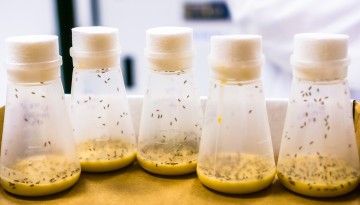
Cornell biologists report that fruit flies’ visual system, not just chemical receptors, is deeply involved in their social behaviors, which sheds light on the possible origin of differences in human social behaviors, such as those seen in people with autism.
Staff have reoriented international organizations to tackle climate change more aggressively despite member states’ disagreement on how to address the issue, new Cornell research finds.
Cornell's Hip Hop Collection, which includes the archives of some of the most influential pioneers of hip-hop, supports and enriches a passionate community of student scholars and artists.
Cornell legal experts will review the fundamentals of free expression during a Sept. 7 panel discussion kicking off the university’s theme year, “The Indispensable Condition: Freedom of Expression at Cornell.”
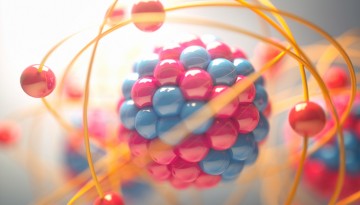
In two new papers, an international collaboration of researchers including Cornell physicists explain, on the microscopic level, why “Planckian” scattering of electrons occurs in some materials but not in others.
Jack Freed, the Frank and Robert Laughlin Professor of Physical Chemistry Emeritus, has received two grants totaling $7.8 million from the National Institutes of Health to use electron-spin resonance for the benefit of public health.
Chromium hydride, a molecule that’s relatively rare and particularly sensitive to temperature, is useful as a “thermometer for stars,” according to astronomer Laura Flagg in published research.