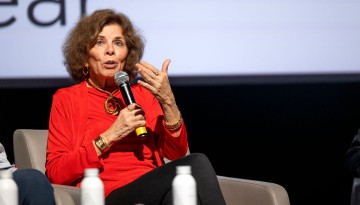
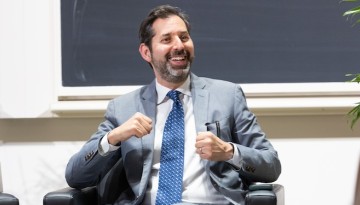
Former ACLU president Nadine Strossen discussed First Amendment issues with Provost Michael I. Kotlikoff and a panel of student leaders on April 29 in Willard Straight Hall.
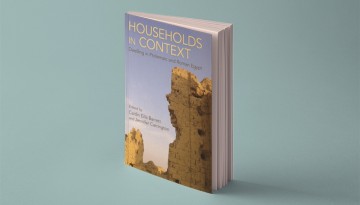
The collection “Households in Context: Dwelling in Ptolemaic and Roman Egypt” shifts the archaeological perspective from public and elite spaces such as temples, tombs and palaces to everyday dwellings and interactions of families.
A Cornell-led research team derived the age of Selam, a “moonlet” orbiting the asteroid Dinkinesh in the main asteroid belt, based only on the pair’s dynamics.
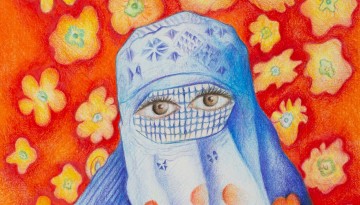
Afghan visual artist Elja Sharifi, currently a visiting scholar at the Herbert F. Johnson Museum of Art, sees her escape from the Taliban as a call to action. She will enter Cornell’s PhD program in art history next fall.
Cornell faculty and husband-and-wife creative team Mendi and Keith Obadike have worked for decades across music, text, and visual art to explore complex histories and social tensions. The resulting pieces invite the audience into a conversation with both the artists and their material.
GOVT 1817 Making Sense of World Politics will be taught online this summer by Dr. Chip Gagnon from June 24-July 12. The three-credit class will examine ways to think critically about global politics and develop informed ways of discussing them.
Reflecting on his time on campus as this year's Zubrow Distinguished Visiting Journalist during the university's Freedom of Expression theme year, David Folkenflik '91 says "freedom of expression isn't at its most potent as an issue or principle when it's easy. In some ways, it matters most when it’s hard."
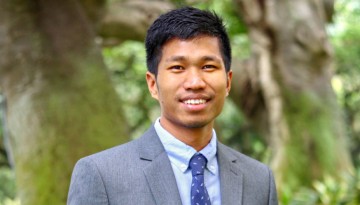
Journalist Kyaw Hsan Hlaing, who exposed the realities of violence perpetrated by the military in his native Myanmar, has been awarded a Paul and Daisy Soros Fellowship for New Americans to support his work toward a Ph.D. in political science at Cornell.