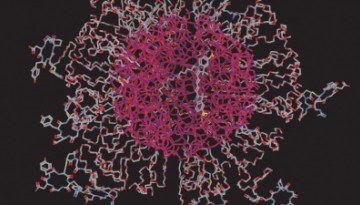
Cornell University, in partnership with Memorial Sloan Kettering Cancer Center, is opening a new $10 million MSKCC-Cornell Center for Translation of Cancer Nanomedicines. The center is based on development of nanoparticles called C dots.
Researchers described their cutting-edge research at a biomedical engineering symposium, “Understanding and Treating Disease: Inspirations from Womb to Tomb,” on campus Sept. 16.
Éva Tardos, the Jacob Gould Schurman Professor of Computer Science, has been named the new editor-in-chief of the Journal of the Association for Computing Machinery.
Not long after Cornell University opened its doors, professors organized expeditions. For 150 years, the faculty and students have traveled around our globe and others.
The National Science Foundation has selected the Cornell NanoScale Science and Technology Facility to be part of a newly established infrastructure. The facility will receive $8 million over five years.
By measuring with exquisite precision the tiny wobbles of Saturn's moon Enceladus, Cornell researchers have learned that a global ocean lies beneath the moon's thick icy crust.
Cornell and the Student Agencies Foundation have create eHub, slated to open in spring 2016, a 14,000 square foot entrepreneurship innovation center on College Avenue and in Kennedy Hall.
In the 2016 U.S. News and World Report rankings released today, Cornell University was ranked No. 15 among top national schools. The Dyson School and the College of Engineering both ranked in the top 10, respectively.