The second annual Intercampus Cancer Symposium, Oct. 11 at the Cornell College of Veterinary Medicine, will highlight the wide range of cancer research taking place at Cornell’s Ithaca campus and at Weill Cornell Medicine in New York City.
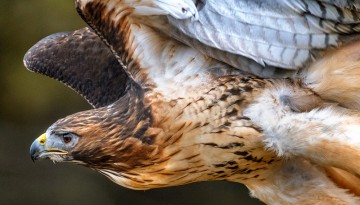
A multidisciplinary team with the Cornell Wildlife Health Lab has created StaPOPd, an online tool that tells users how many plants or animals they need to introduce into a habitat in order to establish a stable population.
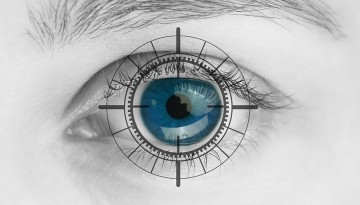
Cornell and Stanford University researchers have solved the three-dimensional structure of a protein complex involved in vertebrate vision at atomic resolution.
To help launch the new Cornell Center for Immunology, world-renowned immunologist Mark Davis was in Ithaca to give a talk and meet faculty and students.
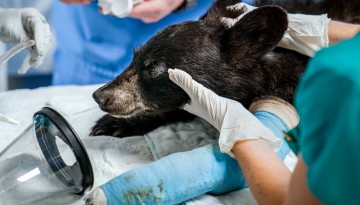
After a female black bear cub was struck by a car over the summer in the Adirondack Park, Cornell veterinary surgeons repaired the bear’s injured left foreleg and sent it on the road to recovery.
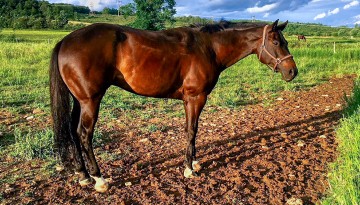
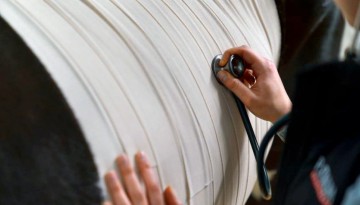
When Wrangler, an 11-year-old show horse, was diagnosed with “kissing spine,” veterinarians at the Cornell University Hospital for Animals performed surgery that got horse and rider back into the ring.
The drawn-out process for diagnosing Lyme disease could become a thing of the past – good news for the thousands of people each year who get the tick-borne illness.
Henry, a 3-year-old horse from Freeville, impaled himself on fencing in January. Within hours, veterinarians at the College of Veterinary Medicine Equine Hospital performed life-saving emergency surgery.