Two lethal viruses, Nipah and Hendra, may be more potent when their proteins are combined, according to new research from Hector Aguilar-Carreno, associate professor of microbiology and immunology.
Cornell and China’s Hebei Qimei Agriculture Science and Technology Co. Ltd., have agreed to collaborate on microbial food safety research, via a $2.5 million grant from the Walmart Foundation.
Dr. Krysten Schuler, senior research associate in the College of Veterinary Medicine, gave testimony on chronic wasting disease June 25 before the House of Representatives Committee on Natural Resources.
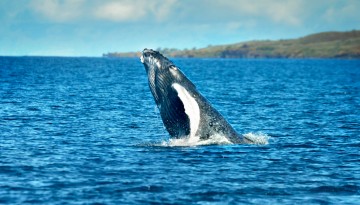
This spring, senior music lecturer Annie Lewandowski worked with Google Creative Lab on a project to develop artificial intelligence that can recognize patterns in humpback whale songs.
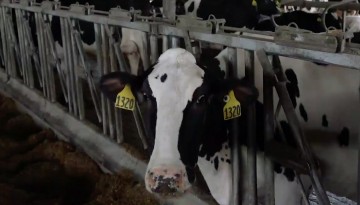
In a new collaboration, students from Dairy Herd Management teamed up with students in Topics in Cloud Computing to learn how to work together to develop the kinds of digital tools that could reshape farming.
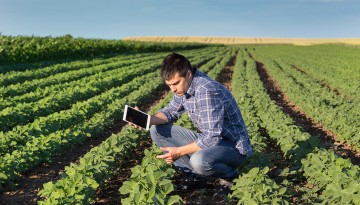
Projects ranging from a soil-swimming robot that can sense conditions in the root zone in real time to computational models that can predict produce spoilage received seed funds from the Cornell Initiative for Digital Agriculture’s new Research Innovation Fund.
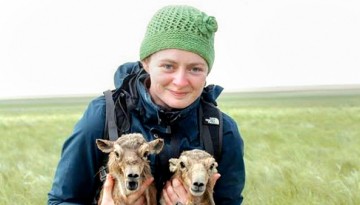
Dr. Wendy Beauvais, a postdoc in the College of Veterinary Medicine, has used a 2015 mass mortality event to create a framework to assess and prioritize future risks of pathogens jumping to wildlife.