Students planning to apply to a Doctor of Veterinary Medicine degree program can track their veterinary and animal experiences on a new app developed by the College of Veterinary Medicine and a software engineering class in Computing and Information Science.
Engineering professors David Putnam and Matt DeLisa have teamed up to create a method for a quick-acting, long-lasting single-shot influenza vaccine that could work quickly and effectively during a pandemic outbreak.
Knowledge Matters, a workshop series designed for Cornell faculty members and academic staff, is helping participants translate their research into a variety of digital media platforms.
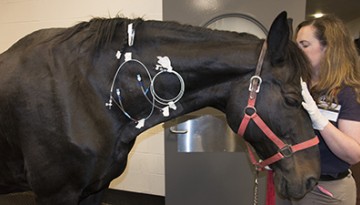
Transvenous electrical cardioversion, a new procedure for atrial fibrillation offered by cardiologists at the College of Veterinary Medicine, resets the quivering heart of a horse back to its normal heartbeat.
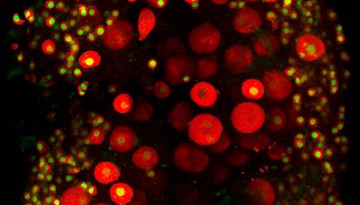
An existing drug may one day protect premenopausal women against life-altering infertility that commonly follows cancer treatments, according to a new study.
Herbert Schryver, DVM '54, an emeritus professor with expertise in veterinary pathology, equine nutrition and biomechanics, died June 26 at the age of 89 in Ithaca.
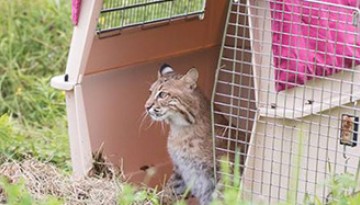
Veterinarians at Cornell's Janet L. Swanson Wildlife Health Center recently saved the life of a bobcat hit by a car in Lansing, New York, and released him into the wild.
By learning how an immune cell called Tr1 works in the body, researchers hope to one day harness the cells to better treat allergies and infections, according to new Cornell research.