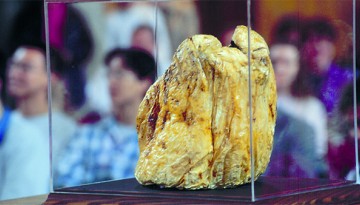
On the brisk autumn morning of Wednesday, Oct. 8, 1997, Cornell students, faculty and staff strolling by McGraw Tower noted an unusual sight: a large pumpkin impaled on the spire 173 feet up. The question remains: Whodunit?
Cornell computer scientists have formed the Center for Data Science for Improved Decision-Making to find ways to handle data responsibly and use it as a resource for the public benefit.
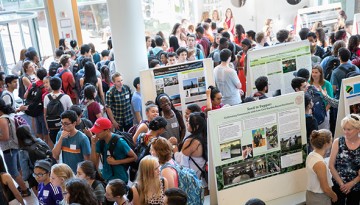
About 30 students from the Cornell Commitment office – Meinig scholars, Rawlings research scholars and Cornell Tradition fellows – presented posters and panel discussions Sept. 27.
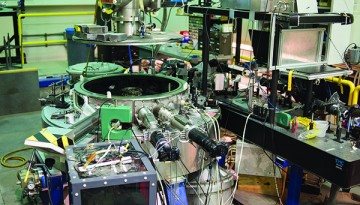
The Laboratory of Plasma Studies received a $15 million grant from the National Nuclear Security Administration and celebrates its 50th anniversary with a symposium Oct. 6-7.
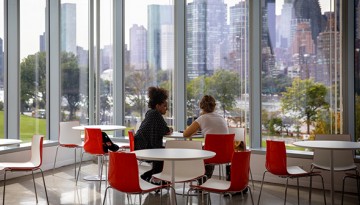
The new Roosevelt Island campus of Cornell Tech has catalyzed a slew of innovative academic programs that will benefit not only Cornell Tech students but also students from the Ithaca campus.
The Cornell Center for Materials Research has been approved for a six-year, $23.2 million extension of funding from the National Science Foundation to continue its mission of research, education and outreach.
An interdisciplinary study led by biomedical engineering professor Claudia Fischbach-Teschl connects breast cancer metastasis to the nanocrystal structure of certain bone regions where metastasis occurs.
Engineering professors David Putnam and Matt DeLisa have teamed up to create a method for a quick-acting, long-lasting single-shot influenza vaccine that could work quickly and effectively during a pandemic outbreak.