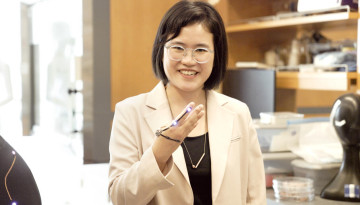
Using centuries-old weaving techniques, materials like living plants, and robotic textiles and smart tattoos, associate professor Cindy Kao is expanding the definition of wearable tech.
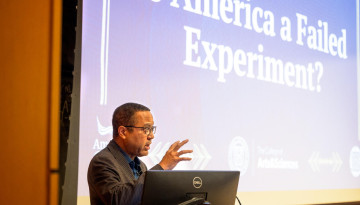
Thought Summits are Cornell’s mechanism for identifying and developing inter- and intra-institutional collaborations in the fields of Data Science and Artificial Intelligence.
A survey of hundreds of Double Up Food Bucks N.Y. recipients revealed that face-to-face interpersonal communication strategies predicted greater total daily fresh fruit and vegetable intake than mass communication methods.
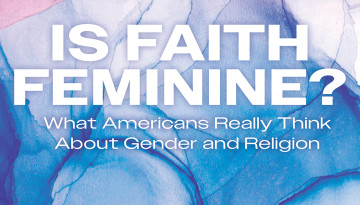
In a new book, sociologist Landon Schnabel debunks assumptions that women are inherently more religious and explains why many Americans are disengaging from religious institutions while maintaining personal spirituality.
Replacing commonly used diversity, equity and inclusion-related terminology with carefully matched alternative language may improve Republicans’ favorability toward diversity training, according to new research from the ILR School.
Five professors from across campus will advocate that their discipline is the most important to save in the annual Apocalypse Debate, sponsored by Logos, the undergraduate philosophy journal and club.
Cornell information science researchers and Cornell Law School faculty found that in capital cases, prosecutors invoke a range of gender stereotypes against women defendants to increase the likelihood of convictions and death sentences.