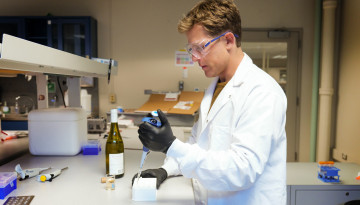
The grant will fund a phase 1 placebo-controlled trial in healthy men, including developing an oral formulation, establishing manufacturing protocols and evaluating safety.
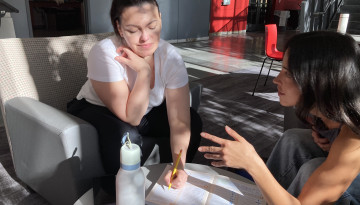
In Fall 2025, Chloe Kritas ‘27 and Oksana Sikora, a cook at Cornell’s Morrison Dining, got together for an hour of English practice each week. Kritas, a hotel administration major interested in learning how to teach, came…
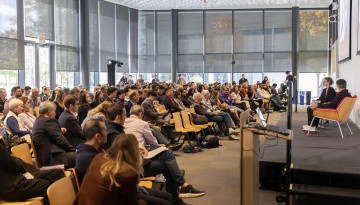
The new Communities of Practice for AI-enabled Research (CoPAIR) program gives researchers access to emerging AI tools, hands-on training and collaborative communities where they can share best practices, develop disciplinary norms for appropriate AI use and non-use, and evaluate new tools for research.
Historian Claudia Verhoeven's “Love and Terror,” which recasts the Manson case as an exemplary site for historical scholarship, is one of three new books from Cornell faculty.
Most faculty, staff and students will have free access to a range of AI platforms – an effort to level the playing field, spur exploration and reduce the costs and vulnerabilities of individual consumer licenses.
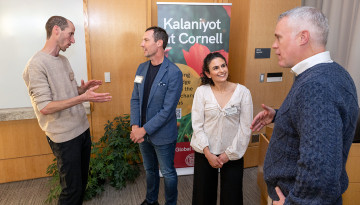
The Cornell chapter of Kalaniyot, a national faculty-led initiative focused on sustaining international academic collaboration by bringing scholars from Israel to Cornell, launched at a reception Oct. 19.
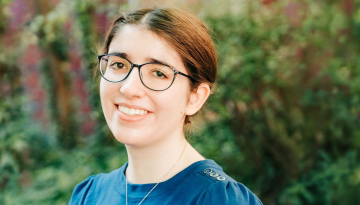
Hannah Lloyd, a postdoctoral associate in Cornell’s Weill Institute for Cell and Molecular Biology, has received the 2026 Sam and Nancy Fleming Research Fellowship
Reducing damage to the nuclei of heart muscle cells improved heart function and dramatically extended survival in mice with a form of inherited heart disease, according to a new study led by Cornell researchers.
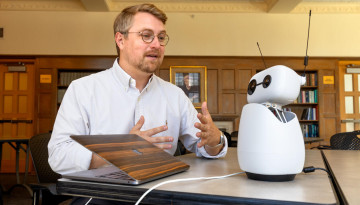
Instructors across Cornell are working to strike a balance in the classroom – using AI as a teaching tool but also making choices to prevent its use and preserve the learning experience.