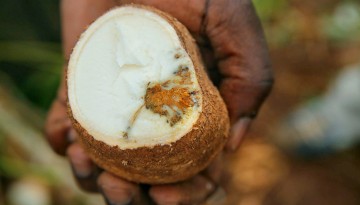
Alfred Ozimati, Ph.D. ’18, is breeding the latest in disease-resistant cassava that meets the needs of subsistence farmers, thanks to the NextGen Cassava project run by Cornell.
Combining observations from human bird watchers with topographical information satellites and information about light at night, the Cornell Lab of Ornithology’s eBird program has just released animated migration maps.
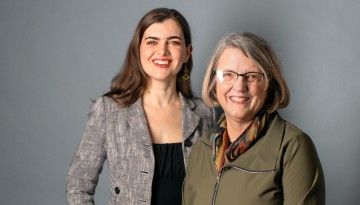
Caitlín Barrett and Kathryn Gleason ’79 have been collaborating since 2016 on the excavation and survey of a large house and garden site, the Casa della Regina Carolina Project, at Pompeii in southern Italy.
Cornell researchers have described a new type of gene drive with the potential to delay resistance that wild populations employ to fend off the genetic engineering of desired mutations.
Eleven early-career faculty members from six colleges and schools will participate in yearlong fellowships advancing ambitious research projects in the social sciences.
Cornell faculty members are finding answers to questions related to a world on the move with a boost from Cornell’s first Migrations grants, awarded by the “Migrations” Global Grand Challenge.
The new school and superdepartments in economics, psychology and sociology are expected to elevate Cornell’s excellence and impact in the social sciences.
The four faculty teams that received funding support through the President’s Visioning Committee on Cornell in New York City have conducted cross-campus workshops, hosted interdisciplinary talks and expanded their outreach.