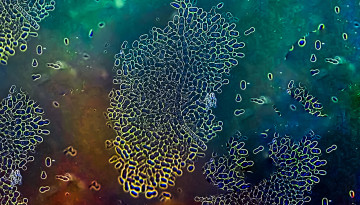
Fungal diseases can contribute up to 20% of staple crop losses and drug-resistant fungal infections lead to some 3.8 million human deaths, globally per year.
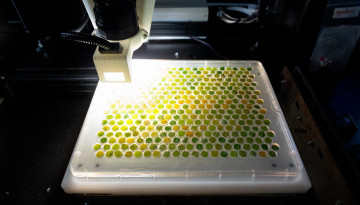
The cutting-edge imaging platform observes microscopic traits in plants and can detect grape diseases that cost vineyard owners billions in annual losses globally.
Life Science Core Day, taking place Sept. 22, offers Cornell researchers a chance to explore an extraordinary range of specialized life science core facilities, technologies, and expertise available to them from across campus in one place.
New event asks the community to decrease technology use, increase face-to-face interaction and consider that every AI chat, doomscroll and text message has a water, energy and carbon footprint.
Cornell and global leaders will come together at Climate Week NYC Sept. 20-27 to discuss some of the world’s most pressing sustainability challenges, including harnessing AI’s power while mitigating its negative impacts.
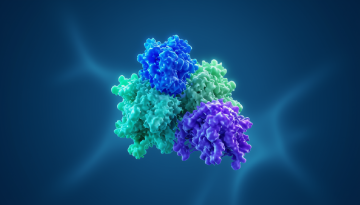
Cornell researchers have used artificial intelligence to uncover a previously unknown way cells control how proteins move inside them, a process essential for growth, communication and movement, and one that is often disrupted in cancer.
Doctoral student Sylvana Ross and a team of Cincinnati youths spent their summer studying city-dwelling insects, amassing data that can inform decisions that support healthy green spaces.
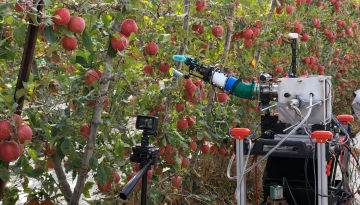
A Cornell-led research project is developing robots that can perform labor-intensive orchard operations; it’s supported by a four-year, $7.5 million grant from the U.S. Department of Agriculture’s Specialty Crop Research Initiative.