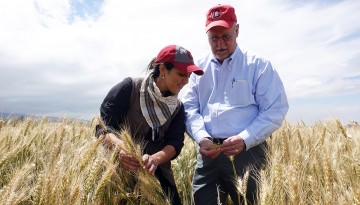
Ronnie Coffman, director of International Programs in the College of Agriculture and Life Sciences, addressed the International Wheat Congress July 23 in Canada, urging renewed commitment to germplasm exchange.
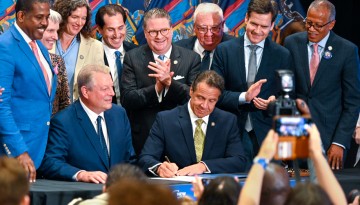
Cornell professor Bob Howarth played a key role – reckoning methane as a carbon dioxide equivalent – in New York’s Climate Leadership and Communities Protection Act.
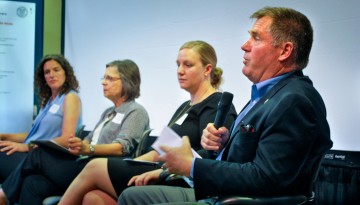
Cornell and the Atkinson Center helped organize a workshop, “Helping NYS address its climate goals through thermochemical conversion,” on July 16 to develop opportunities for New York to meet its climate goals.
Cornell researchers have released a free, open-source software to help make potentially subjective and time-consuming plant breeding decisions more consistent and efficient.
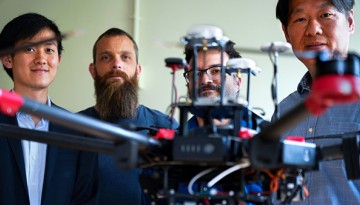
The new Shen Fund for Social Impact will enable students to pursue engineering projects that could benefit society by using technology in innovative ways.
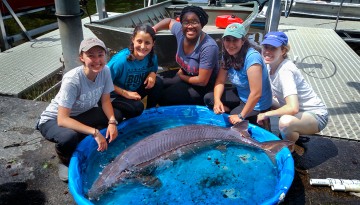
Researchers from the Cornell Biological Field Station, caught, tagged and released a 139-pound lake sturgeon – possibly the largest fish ever caught on that lake.
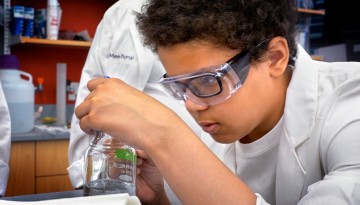
Five students from Watertown’s Wiley Intermediate School 4-H after-school program will watch their experiment soar from Cape Canaveral on July 21 to the International Space Station.
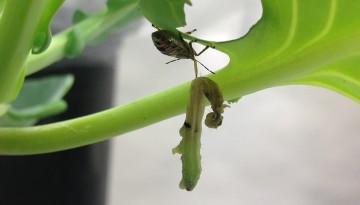
A new study of cabbage crops in New York reports for the first time that the effectiveness of releasing natural enemies to combat pests depends on the landscape surrounding the field.
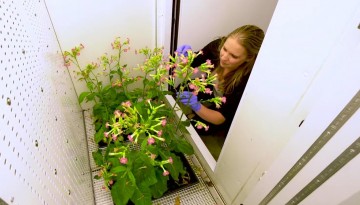
Cornell and University of Illinois researchers have engineered plants capable of making proteins not native to the plant itself, which opens the door for cheaply making proteins for industrial and medical uses.