Reproductive health researchers from across the Northeast gathered at Cornell University April 30–May 1 to examine infertility, embryo development and reproductive aging at the 2026 Tri-State Symposium on Reproductive Sciences.
Five innovative immunology research projects have been selected for funding through the Cornell Center for Immunology's 2026 Multidisciplinary Seed Grants.
Complex health challenges require expertise from multiple scientific…
The Graduate Excellence and Impact Awards recognized members of the graduate community for their impacts on advancing access, engagement and belonging through service and leadership.
One of the newest additions to Cornell’s Living Lab, the anaerobic digester will generate electricity and provide a real-world testbed for researchers across campus.
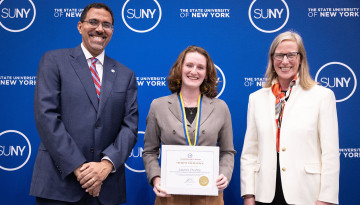
Nine students and recent graduates representing Cornell’s four contract colleges have been chosen to receive the 2026 State University of New York (SUNY) Chancellor’s Award for Student Excellence.
Cornell researchers have discovered that a lethal variant of feline coronavirus, previously thought to be limited to a devastating 2023 outbreak in Cyprus that killed thousands of cats, has in fact appeared in the United States, raising concerns about future large-scale outbreaks in vulnerable cat populations.
Delaying hepatitis B vaccination after birth increases infections among newborns and decreases their survival rates and quality of life, according to a new study in JAMA Pediatrics.