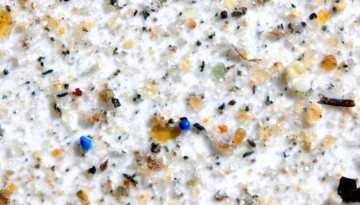
By sea or by land, microscopic shards of plastic are more ubiquitous than science had known, according to a new study led by researchers at Cornell and Utah State University.
In a virtual conference on April 15–16, scholars, activists and practitioners from around the world will meet to explore plantations’ deep-rooted legacies, including racial inequality, dispossession and climate change.
Writer, activist and political analyst Nanjala Nyabola will discuss her upcoming book as part ofGlobal Cornell’s Race and Racism across Borders webinar on April 12 at 11:00 a.m. Following the dialogue, Cornell students will present their original prose, poems and visual art.
Despite agricultural advancements, a Cornell-led study shows that global farming productivity is 21% lower since the 1960s than it could have been without climate change.
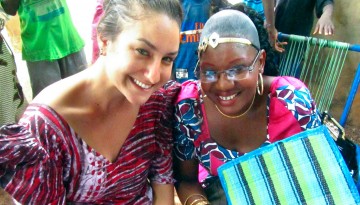
Like thousands of other Cornellians who have volunteered for the Peace Corps, Amanda Freund ’06 and Janet Smith, M.S. ’19, share common ground: learning from the people they served.