Researchers from every corner of Cornell are mobilizing to tackle one of the grand challenges of the modern era – migration – with a new initiative that launched Oct. 1.
Cornell Law School launched its Cornell India Law Center on Sept. 26 with a lecture by Richard Verma, vice chairman and partner at the Asia Group and former U.S. ambassador to India.
Cornell will host a Precision Nutrition Symposium, Oct. 14-15, designed to foster the development of collaborative and multidisciplinary working groups from Cornell’s Ithaca and New York City campuses.
Twenty-four faculty members, representing six colleges and the Cornell University Library, make up the 2019-20 cohort of the Engaged Faculty Fellowship Program.
After an eight-month study, a task force of 16 faculty members has chosen “Migrations” as the theme of the first Cornell Global Grand Challenge, which will tackle the issue with resources from across the university.
A Cornell-led team has developed a computational model that uses artificial intelligence to find the most sustainable configurations of hydropower dam sites in the Amazon basin.
The U.N.’s Global Sustainable Development Goals report – prepared by independent scientists, including Cornell’s Parfait M. Eloundou-Enyegue – was delivered Sept. 10 to the U.N. Secretary-General.
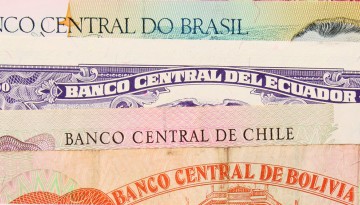
“The Political Economy of Taxation in Latin America,” a new book edited by associate professor Gustavo Flores-Macías, examines how decades of tax reform in Latin America have done little to stem the tide of widespread tax evasion there.
To safeguard the world’s wheat crops, disease-resistance genes must be deployed in an informed way, according to Maricelis Acevedo, adjunct professor in the College of Agriculture and Life Sciences.