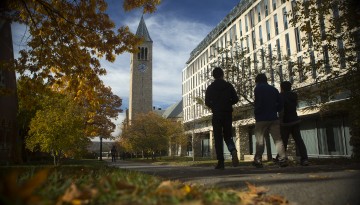
The Office of Engagement Initiatives recently awarded Engaged Curriculum Grants to 19 teams of faculty and community partners that are developing community-engaged learning courses, majors and minors across the university.
A new interdisciplinary study from the College of Veterinary Medicine shows that the protein that lubricates our joints may actually be a signal of impending arthritis in animals and humans.
A new interdisciplinary research project is designed to unlock the power of wind energy by optimizing the spacing between wind turbines and wind turbine arrays to maximize power production.
Small-scale farmers see a path to solving global hunger over the next decade, thanks to a Cornell-hosted project that used artificial intelligence to cull ideas from more than 500,000 scientific research articles.
Three New York state companies have been chosen to participate in the Cornell Center for Materials Research JumpStart Program, through which they will collaborate with faculty members to develop and improve their products.
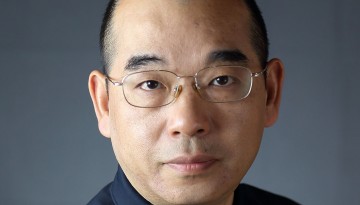
Shu-Bing Qian, a professor of molecular nutrition whose work explores how genetic information gets translated in order to make proteins in cells, has won a National Institutes of Health Director’s Pioneer Award.
Graduate students in six fields of study have designed an evolution lesson on speciation for undergraduate non-majors that applies active-learning techniques. The lesson was published in CourseSource.
A new study in mice identifies a gene that is critical for short-term memory but functions in a part of the brain not traditionally associated with memory.