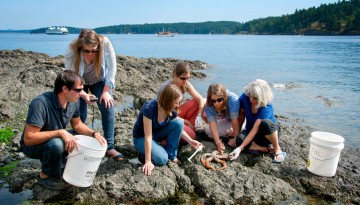
A paper on safety issues for scientists doing fieldwork describes how peers, mentors, departments and institutions can all help to address these problems.
The Cornell Atkinson Center for Sustainability is celebrating its 10th anniversary by focusing with renewed urgency on more powerful ways to translate knowledge into action.
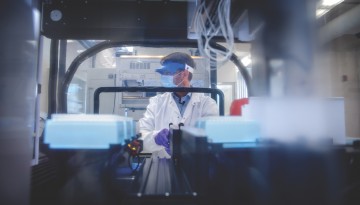
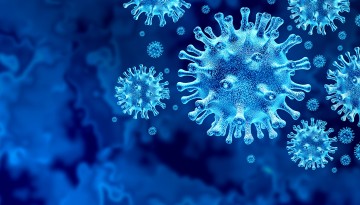
Cornell researchers are working collaboratively at the forefront of their fields to re-examine and adapt their innovations to develop the tests, treatments and knowledge necessary to end the COVID-19 pandemic.
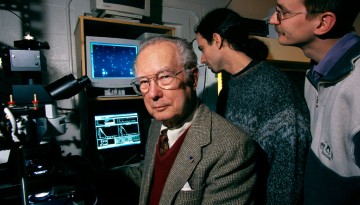
Applied physicist Watt W. Webb, the S.B. Eckert Professor of Engineering Emeritus and a pioneer in methods for imaging living biological systems, died Oct. 29. He was 93.
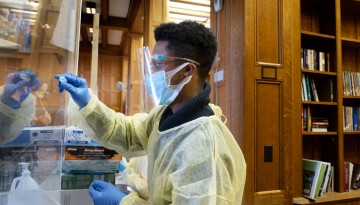
At Cornell, committed leaders, expert faculty, trained staff and student hires have worked tirelessly behind the scenes to create a winning strategy to reactivate campus and keep the community safe from COVID-19.
A Cornell-led project will use computer modeling and outreach to find optimal strategies to minimize COVID-19 cases and transmission among workers in food processing facilities, while maintaining the best possible production.
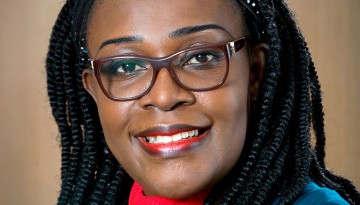
Irene Sumbele, a visiting scientist with the Master of Public Health program at the College of Veterinary Medicine, has been named the 2020 Beau Biden Scholar by the Institute of International Education’s Scholar Rescue Fund.
Dottie, a 3-month old bobcat, came to Cornell Animal Hospital for hip surgery after her keepers think she fell in her enclosure. She is recovering well.