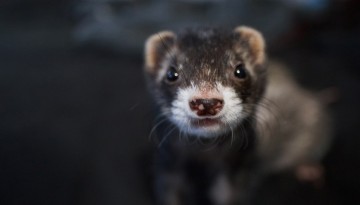
Cornell researchers have helped develop a nasal formulation that blocks the spread of COVID-19 among ferrets – and are hopeful the formulation could have the same effect on humans, and potentially generate therapeutic treatments as well.
The February 16 episode of All Things Equal featured Cornell’s Shakima Clency and Aminah Taariq-Sidibe previewing the March 1 Martin Luther King Jr. Commemorative Lecture with writer Ijeoma Olou.
A residential program house dedicated to student veterans will open this fall near West Campus, providing a much-needed space for Cornell’s growing veteran population to find community, resources and support.
Harold “Hal” Bierman Jr., the Nicholas H. Noyes Distinguished Professor Emeritus of Management and Finance, died Feb. 12 in Ocean Isle Beach, North Carolina. He was 96.
Four early-career faculty members have won 2021 Sloan Research Fellowships from the Alfred P. Sloan Foundation, which support research and education related to science, technology, mathematics and economics.
People tend to prefer prototypical leaders even in situations that call for prototypical managers, a bias that can be tempered by deliberative thinking, according to new Cornell research.
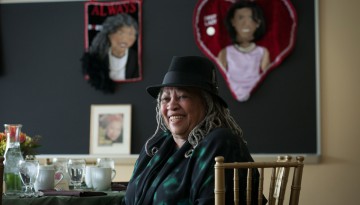
Celebrating the author’s work and the community-building tradition of African American quilt-making, the Toni Morrison Quilting Project kicks off on Feb. 22, noon to 1:30 p.m., with a virtual quilting traditions workshop, featuring Ithaca-based fiber artist Heather Stewart.
Olivia Adams ’14 M.Eng ’15 saw a problem: people in Massachusetts were having a difficult time signing up for COVID-19 vaccine appointments. So, she built a solution
John R. Kasich, governor of Ohio from 2011 to 2019, will share insights about the future of the Republican party in a virtual event with the Cornell community on Feb. 17.