Official statistics on use of deadly force by police resulting in death underreport the reality; a new study finds much higher rates of police homicide that varies by region.
A new study from Cornell researchers finds domestic abusers can choose from thousands of apps to spy on their partners, from traditional spyware to software intended for legitimate purposes, like finding phones.
Humans have a cognitive bias toward earning, which makes us unconsciously spend more brain power on earning than on saving, according to a new Cornell study.
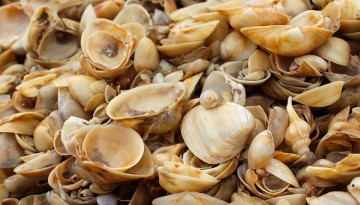
Cornell and Paleontological Research Institution scientists dug into the Colorado River's estuary mudflats to learn how upstream dams affect downstream mollusks.
The Provost’s Task Force to Enhance Faculty Diversity has issued its report on attracting and retaining outstanding female and underrepresented minority faculty members.
The first fall issue will be August 24, resuming the biweekly enewsletter schedule as follows: Aug. 24, Sept. 7, Sept. 21, Oct. 5, Oct. 19, Nov. 2, Nov. 16, Nov. 30 and Dec. 14.
Thirteen-year-old Logan recently became the first cat in the United States to undergo a surgical spinal technique developed in Europe at the College of Veterinary Medicine.
Mars may not have an Earth-like, continental crust. Instead, a Cornell scientist poses an alternative theory: Crystalized magma welled up from inside the red planet.
Chemistry professor Héctor Abruña will lead a Department of Energy-sponsored Energy Frontier Research Center at Cornell, aimed at developing next-generation, alkaline-based fuel cells.