A new initiative aims to increase participation rates and enhance the success of under-represented ethnic minorities and students who are deaf or hard of hearing in biological and biomedical graduate fields at Cornell.
President Martha E. Pollack and Vice President for Student and Campus Life Ryan Lombardi issued a statement March 10 following an assault in Collegetown in which racial slurs were used.
Events this week include Union Days, The Alloy Orchestra at Cornell Cinema, Sitara Night, a Science Cabaret on the mechanics of bicycles, pianist Jeremy Denk, and the domestic violence documentary "Home Truth."
Employee Assembly election materials will be available March 19, for submission by March 26. Online voting will be April 10 beginning at 8 a.m. and ending April 12 at noon.
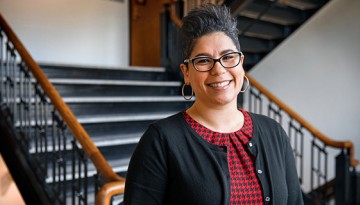
As part of Cornell's Disability Awareness Month campaign, Sara Hernández, MRP '07, associate dean for inclusion and student engagement in the Graduate School, discusses her experiences with having a hidden disability.
Cornell University scientists are beginning to unravel the complicated connections between viruses, the environment and wasting diseases among sea stars in the waters of the Pacific Northwest.
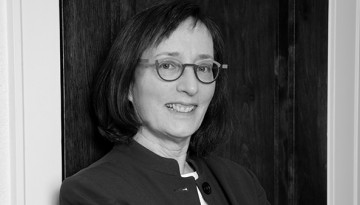
Julie Schumacher, MFA ’86, award-winning author of “Dear Committee Members,” talks about creative writing programs, academia as source material and her Cornell mentors in advance of her reading on campus March 15.
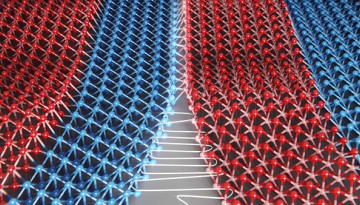
Research from Cornell and the University of Chicago has revealed a technique to “sew” two patches of crystals seamlessly together to create atomically thin fabrics.
Sustained climate warming will drive the ocean’s fishery yields into steep decline 200 years from now and that trend could last at least a millennium, said scientists from Cornell and the University of California, Irvine.