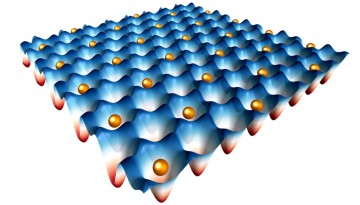
Physicist Kin Fai Mak has received a $1.25 million grant from the Moore Foundation Experimental Physics Investigators Initiative to further his research into electron behaviors by studying two-dimensional crystals.
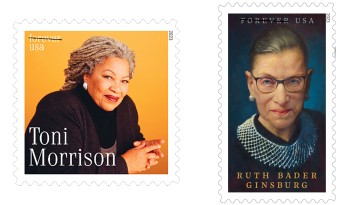
Two Cornell icons woven into the fabric of American history – Nobel laureate Toni Morrison and Supreme Court Justice Ruth Bader Ginsburg – will be commemorated in 2023 with a U.S. postage stamp.
Cornell has been selected to join the Schmidt AI in Science Postdoctoral Fellowship, a program of Schmidt Futures, to accelerate the next scientific revolution by applying artificial intelligence to research in science, technology, engineering and mathematics.
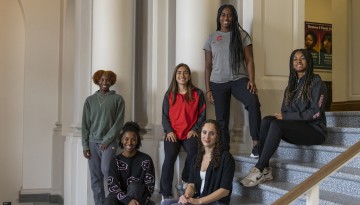
Female student athletes of color founded Women of Color Athletics to provide a community of women who understand the challenges they face and a channel to voice their concerns.
Ideas that sprang from a pre-pandemic panel discussion at Cornell now inform a United Nations initiative aimed to meet looming global food needs in a healthy, equitable and sustainable way.