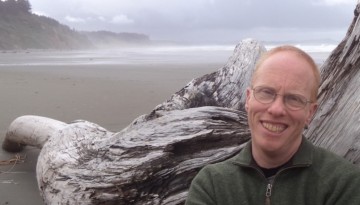
Five Cornell mathematicians from the College of Arts and Sciences have been invited to speak at the world-renowned International Congress of Mathematicians (ICM) this year.
The five-year campaign aims to shape Cornell as the model university for the 21st century and beyond, building on its foundation of world-class academics, research and engagement.
Cornell is launching a sweeping new initiative aimed at making its education even more accessible to the most talented students from all socioeconomic backgrounds.
First row, left-to-right: Jingye (Ellie) Duan, Laura Gunn and Mario Herrero. Second row, left-to-right: Ian Owens, Chris Roh and Vivek Srikrishnan. Photos by Allison Usavage.
Learn how students across the College of Agriculture and Life Sciences have taken actions over the past year to make our community a more diverse, equitable and inclusive place for everyone.
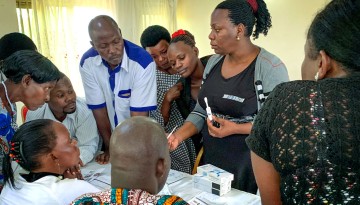
Partnering with traditional healers improves uptake of HIV tests in rural Uganda, according to a trial by Weill Cornell Medicine and Mbarara University of Science and Technology investigators.
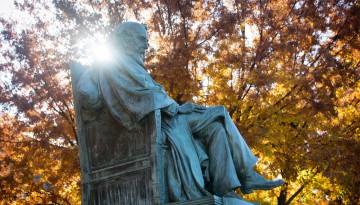
Two renowned biologists, May Berenbaum, Ph.D. ’80, and Ellen Rothenberg, have been appointed to six-year terms as Andrew Dickson White Professors-at-Large.
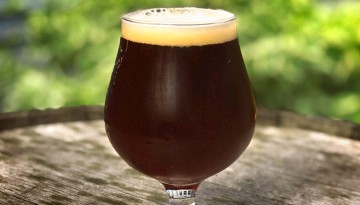
It’s got Finger Lakes hops, malt and cherries, plus Cornell maple syrup. Introducing ‘Gorges Libe-ation,’ a red ale developed by grad students and chock full of New York.
George Will and Martha Nussbaum will discuss “The Future of Division I College Athletics: Sexual Assault and Academic Corruption” Oct. 28, as part of the Coors Conversation Series.
The faculty recipients of the 2021 Innovative Teaching and Learning Awards will use grants of up to $20,000 to explore new teaching technologies and strategies to enhance the student learning environment across campus.
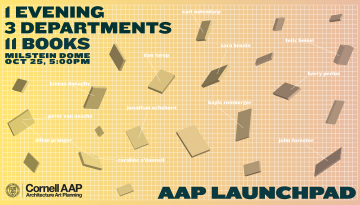
Join the College of Architecture, Art, and Planning on Monday, October 25, 5–7 p.m., for a special event showcasing recent books and volumes written and edited by AAP faculty.