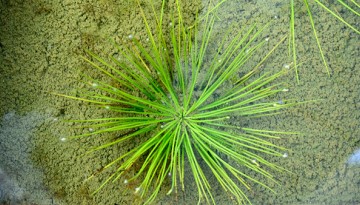
Researchers have assembled a high-quality Isoetes genome that furthers understanding of how these aquatic plants regulate CAM photosynthesis to compete for carbon dioxide underwater, and how that regulation differs from terrestrial plants.
How many adorable cat videos can you watch in one sitting? Kaitlin Woolley ’12, associate professor of marketing in the Johnson School, said they’re kind of like potato chips: You can’t consume just one.
For the first time, Cornell University is offering the opportunity to earn an Executive Master of Management in Hospitality (EMMH). Delivered online with residential sessions, in collaboration with eCornell, the program is built…
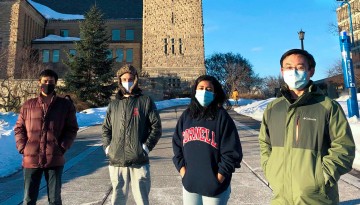
A team of Cornell students has won a grant from NASA’s University Student Research Challenge for a proposed sensor that can help 3D printers build better, more reliable products. To collect the prize, the team is now crowdfunding a cost-share required by NASA.
Lourdes Casanova, the Gail and Rob Cañizares Director of the Emerging Markets Institute, and faculty fellow Anne Miroux will co-host the EMI Conference this week in the Verizon Executive Education Center at Cornell Tech.
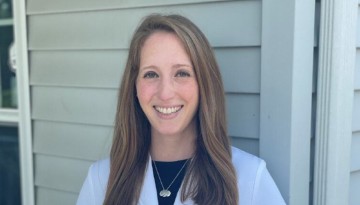
Katherine H. Saunders MD ’11, an assistant professor of clinical medicine at Weill Cornell Medicine, specializes in the care of patients with obesity and weight-related medical complications.
A new summer fund will help Cornell’s growing numbers of student veterans pursue unpaid summer internships – the latest in a long series of initiatives and programs aimed at creating a welcoming and supportive community for students who served in the U.S. Armed Forces.
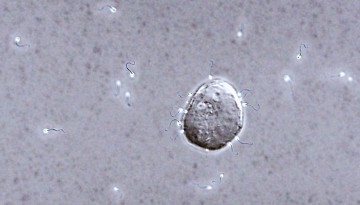
A new study by Cornell researchers reveals how sperm change their swimming patterns to navigate to the egg, shifting from a symmetrical motion that moves the sperm in a straight path to an asymmetrical one that promotes more circular swimming.
President Martha E. Pollack lauded faculty for recent honors, thanked donors for recent major gifts to Cornell and touted the university’s efforts on diversity and inclusion.
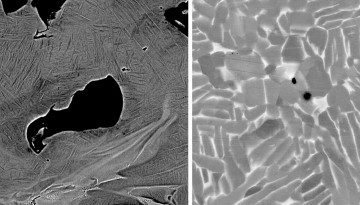
Cornell researchers found that by deliberately introducing more defects into a 3D-printed metal alloy, followed by a post-processing treatment, they could create a stronger, more ductile material.
JP Pollak, co-founder and chief architect at The Commons Project Foundation, which is working on a universal vaccine app, is the guest for the fifth episode of the Startup Cornell podcast.