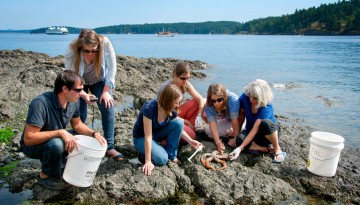
A paper on safety issues for scientists doing fieldwork describes how peers, mentors, departments and institutions can all help to address these problems.
The Cornell Atkinson Center for Sustainability is celebrating its 10th anniversary by focusing with renewed urgency on more powerful ways to translate knowledge into action.
Cornell-led research has found that effective national and local governments are associated with fewer deaths from natural disasters – even in countries with similar levels of wealth and development.
Cornell researchers are working collaboratively at the forefront of their fields to re-examine and adapt their innovations to develop the tests, treatments and knowledge necessary to end the COVID-19 pandemic.
Maria Fitzpatrick, professor of economics and public policy in the College of Human Ecology, is Cornell’s new associate vice provost for social sciences. She began her three-year appointment on Sept. 1.
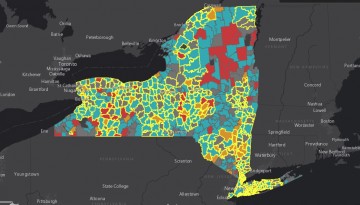
The ILR School has launched the NYS School District COVID-19 Tracker, an interactive, web-based mapping application that combines multiple sources of data on COVID-19, demographics and related topics by school district.
Black feminist scholars will examine the current socio-political and cultural moment in “Triangle Breathing: A Conversation with Hortense Spillers and Alexis Pauline Gumbs,” the final Barbara & David Zalaznick Reading Series: At Home virtual event of the fall. The event, Nov. 10 at 7 p.m.
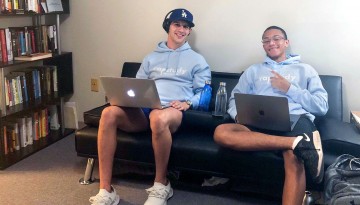
Cosimo Fabrizio ’22 and Drew Speckman ’21 are co-founders of rapStudy, which pairs popular song melodies with new lyrics meant to help elementary and middle schoolers learn about everything from civics to the scientific method.
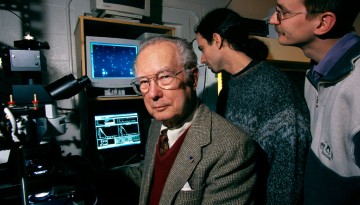
Applied physicist Watt W. Webb, the S.B. Eckert Professor of Engineering Emeritus and a pioneer in methods for imaging living biological systems, died Oct. 29. He was 93.
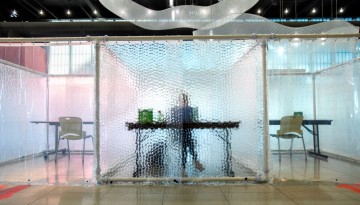
To help students find safe places to study on campus, the College of Human Ecology has created cozy, 7-foot-square cubes out of PVC pipe and plastic sheeting.
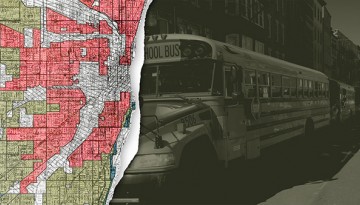
The College of Arts and Sciences’ yearlong webinar series, “Racism in America,” will examine past and present impacts of racism on education and housing in its next webinar, “Education and Housing,” Nov. 19 at 7 p.m.
On the eve of Election Day, Vice President for University Relations Joel Malina reminded members of the campus community of all the voting resources available to them, including information about polling places and public transportation.