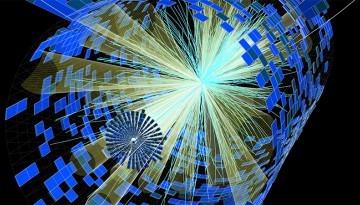
Physics professor Peter Wittich will lead a Cornell team that is part of an NSF-funded initiative aimed at expanding computation capacity for physics experiments at the Large Hadron Collider.
Geospatial intelligence startup Ursa Space Systems, a Rev: Ithaca Startup Works member, raised $5.7 million in new venture funding and boasts gender parity among its leadership team.
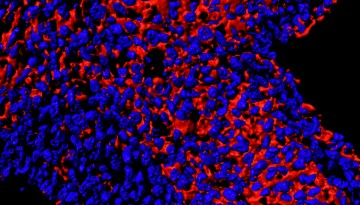
A previously ignored part of the intestine has turned into the key to its most crucial moment in embryonic development: the rotation that winds intestines.
Events this week include CU Downtown on the Ithaca Commons, "Nuclear Visions" at Cornell Cinema, the Farmers' Market at Cornell, a fall opening reception at the Johnson Museum, and a book talk on refugee policy with María Cristina García.
The College of Engineering now enrolls equal numbers of undergraduate women and men, a historic shift after decades of underrepresentation in the field.
Engineer and entrepreneur David A. Duffield ’62, MBA ’64, will be given the inaugural Cornell Engineering Distinguished Alumnus Award Tuesday, Sept. 4.
The Atkinson Sustainability Leadership Program will help postdoctoral researchers and graduate students translate ideas from the academy into real-world impact.