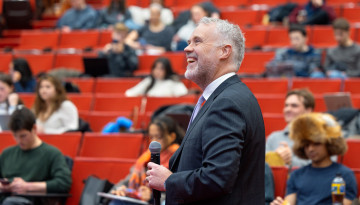
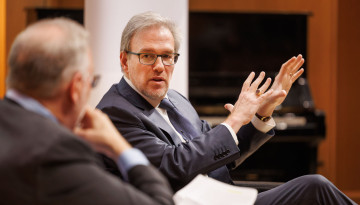
A new class, Disagreement, co-developed by Arts and Sciences Dean Peter John Loewen, helps students learn how to confront and move through disagreements at work, at home, in their communities and in society.
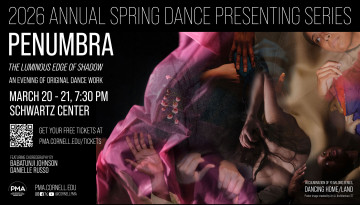
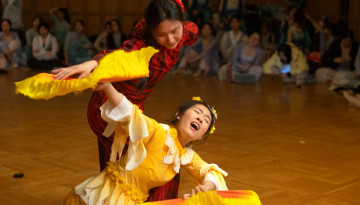
“Penumbra,” is comprised of two dance pieces: “seemingly perfect, radiant” by faculty member Danielle Russo, assistant professor of the practice in performing and media arts (A&S) and “Society” by guest choreographer Babatunji Johnson.
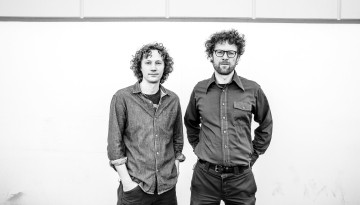
The World According to Sound, a duo who were artists-in-residence on campus in the fall of 2019, will visit Cornell with their new show, “Ways of Knowing.”
Cornell physicists and Google researchers engaged a panel of 12 human experts to test the ability of six LLM systems to understand scientific literature at the level of a specialist.
A live and online audience of nearly 1,000 tapped into an ongoing conversation between Bret Stephens and Seth Klarman about media, democracy, education and the nature of debate.
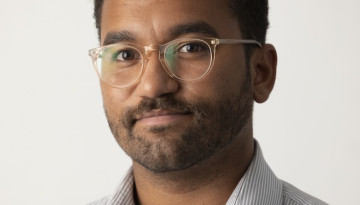
New York Times White House correspondent Zolan Kanno-Youngs will share insights about his work covering immigration, homeland security, criminal justice and inequality in an event March 17 with Dean Peter John Loewen.