Weiss and Provost awards honor outstanding faculty
By Holly Hartigan, Cornell Chronicle
Seven teaching faculty from across the university have been awarded Cornell’s highest honors for graduate and undergraduate teaching.
The Stephen H. Weiss Teaching Awards honor faculty who have a sustained record of commitment and excellence in the teaching and mentoring of undergraduate students.
The Provost Award for Teaching Excellence in Graduate and Professional Degree Programs honors faculty who excel in teaching and academic advising in programs that lead to an advanced degree at the master’s, Ph.D., D.V.M. and J.D. levels.
Both awards require nominations and letters of support from faculty and students as well as other documentation.
“These outstanding faculty exemplify the highest standards of teaching and mentorship, dedicating their energy and expertise to sparking the intellectual growth of our students at the undergraduate and graduate levels,” President Michael I. Kotlikoff said. “Their talent and commitment fuel our students’ academic journeys, and I deeply appreciate their commitment to Cornell’s mission.”
“These educators not only advance knowledge in their fields, but also shape lives, preparing students to think critically, act ethically and lead with purpose,” said Provost Kavita Bala. “Excellence in teaching lies at the heart of Cornell’s mission, and we are deeply proud of the faculty members recognized with these teaching awards.”
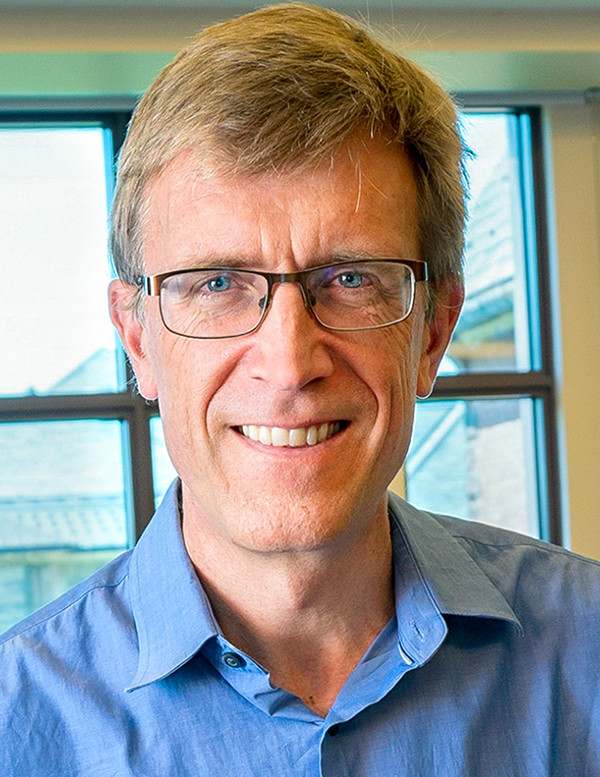
The Stephen H. Weiss Presidential Fellows are Kyle Lancaster, professor of chemistry and chemical biology in the College of Arts and Sciences (A&S), and David Yearsley, the Herbert Gussman Professor of Music (A&S).

Kyle Lancaster
David Yearsley

Adam Seth Litwin
Marie MacDonald
Mark Sarvary

John Whitman
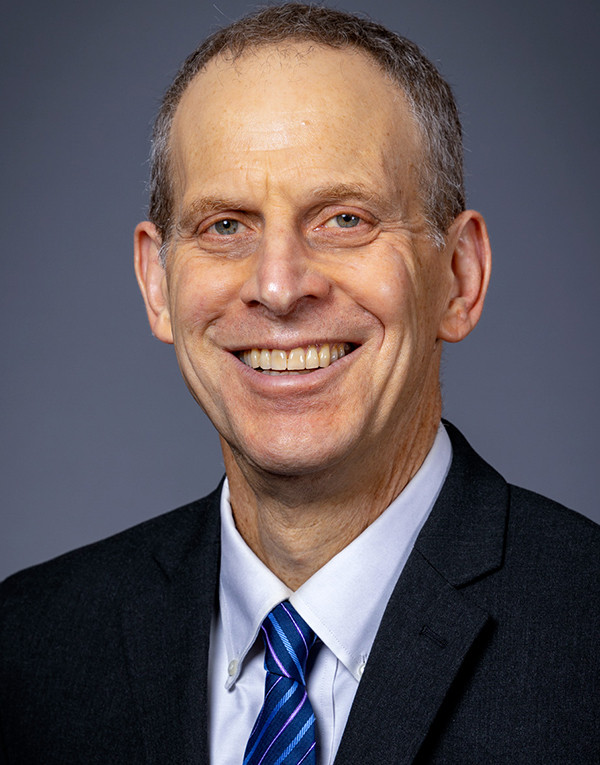
Michael Dorf
Lancaster teaches General Chemistry I, which has a reputation for being a complex and intense course. But he makes it interesting and understandable, one nominator wrote.
“He has the rare ability to present difficult, abstract concepts in a clear fashion,” the nominator wrote. “Because the students understand Kyle’s lectures, chemistry seems to come alive for them.”
Nominators praised Lancaster’s approachability and ability to cultivate a supportive learning environment. One nominator wrote about their experience at Lancaster’s office hours.
“As he re-explained content, provided additional practice problems, and worked hard to address students’ needs,” the nominator wrote, “his support enabled me to build an arsenal of resources to aid me in achieving my goals and boosting my confidence.”
Several student nominators wrote that Lancaster, who first came to Cornell as a postdoctoral associate in 2010, inspired them to pursue further studies and careers in inorganic chemistry.
“Kyle treats undergrads with profound respect, inviting us to participate in scientific conversations typically reserved for more advanced chemists,” a former student wrote. “His love for teaching is contagious, and it transformed a required premed course into a field I now hope to pursue professionally.”
Yearsley is a leading scholar in the fields of Bach studies and organology and is a world-class performer on keyboard instruments. But his nominators describe him as equally adept in the classroom, teaching students to approach scholarly inquiry with rigor, care and imagination.
“Professor Yearsley’s teaching sparked a genuine interest in the field and created an environment that was both academically challenging and remarkably supportive,” one former student wrote. “His classes were among the most engaging I took at Cornell, and his encouragement made me want to meet the high standards he set – not out of obligation, but out of respect and a sincere desire not to let him down.”
Yearsley, who came to Cornell as a lecturer in 1994, treats students as “junior colleagues” and listens as much as he teaches, one nominator wrote.
“Students don’t just leave his classes knowing more,” they wrote. “They leave knowing how to keep learning, and with a real sense that they belong to a genuine community of thinkers.”
The Stephen H. Weiss Junior Fellow is Adam Seth Litwin, associate professor of industrial and labor relations and director of graduate studies in the ILR School.
Litwin teaches Introduction to Industrial and Labor Relations to first-year ILR School students, setting the foundation for their academic development.
“In a lecture hall of 170-plus students, Professor Litwin somehow created a sense of community,” a former student wrote. “He insisted we use name tents to foster connection and discussion, and he wove classical theories into real-world simulations that challenged us to think critically and collaboratively, such as negotiating a police contract. That level of care and attention was not an exception – it’s who he is.”
Litwin, who joined the faculty in 2014, is committed to continuous improvement in his teaching, nominators wrote. He seeks feedback from students at the start of each semester and adjusts his teaching to incorporate topics they find interesting, and he proactively addresses their concerns and suggestions. He has also adapted his Technology at Work class to incorporate timely issues around artificial intelligence, they said.
One nominator wrote: “Each of the three primary courses he teaches at ILR have benefited greatly from an admirable level of design and redesign.”
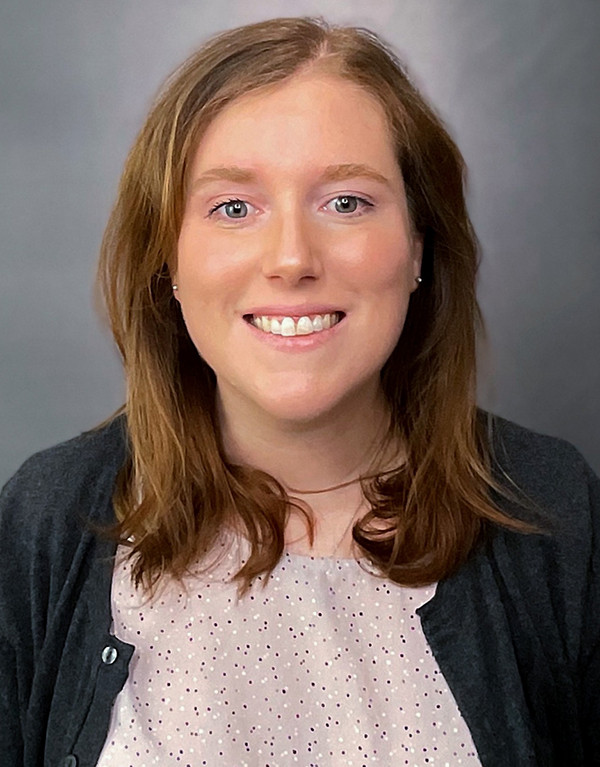
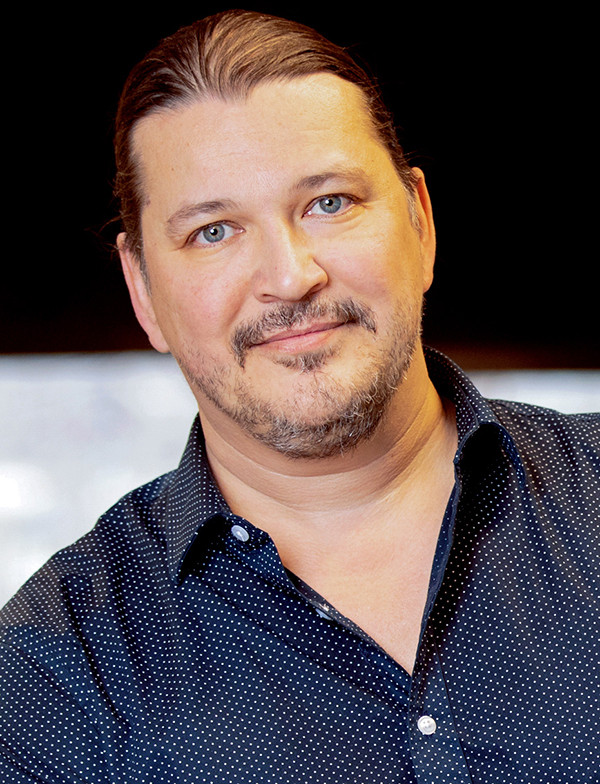
The Stephen H. Weiss Provost’s Teaching Awards honor nontenured faculty. The 2025 fellows are Marie MacDonald, senior lecturer of mathematics (A&S), and Mark Sarvary, Ph.D. ’06, senior lecturer of neurobiology and behavior in the College of Agriculture and Life Sciences.
MacDonald, who joined the faculty in 2018, teaches introductory mathematics to students from a variety of majors. She makes math approachable and clear and provides generous support to students who seek it.
“She’s helped me enjoy math for the first time in my life,” a former student wrote. “I will forever be grateful for the light she’s brought to me while I was studying under her.”
MacDonald played a central role in Cornell’s Active Learning Initiative, a mode of instruction focused on discussion, group work and guided discovery, with the goal of helping students overcome anxiety about math and engage with the subject in a new way.
She has reworked her classes around these principles, using in-class group work, “workshops” led by teaching assistants and concise projects to make the classes useful and interesting.
“Her teaching methods were engaging,” one former student wrote, “and the exercises that we did in class were very helpful by having everything explained in great detail but in a way that was easy for me to understand.”
Since becoming a Cornell lecturer in 2010, Sarvary has dedicated himself to using evidence-backed teaching methods and refining them based on students’ feedback. He is also director of the Investigative Biology Teaching Laboratories.
“His research has significantly enhanced the course structure and content, ultimately benefiting student learning, retention, and engagement,” a colleague wrote in a letter of support for Sarvary’s nomination.
Sarvary designed the course Pedagogy, Active Learning, and Education Research in Biology to prepare teaching assistants for their role, which has improved undergraduate students’ class performance.
“Training of TAs is not just an effort to allow them to pass their knowledge down to the next set of students,” the colleague wrote, “but an opportunity to train better educators and communicators for the future of our classrooms and communities.”
In 2020, Sarvary created the Science Communication and Public Engagement undergraduate minor to train budding science communicators.
A former student now attending medical school wrote: “The ability to clearly communicate complex information, especially to patients and interdisciplinary teams, is critical in medicine. Professor Sarvary instilled this mindset early on, and I will carry this perspective with me throughout my career.”
The Provost Award for Teaching Excellence in Graduate and Professional Degree Programs recognizes individuals who have demonstrated a record of teaching excellence at the graduate level that spans at least the past five years. This year’s winners are John Whitman, professor of linguistics (A&S), and Michael Dorf, the Robert S. Stevens Professor of Law at Cornell Law School.
A former student described Whitman’s knowledge of linguistics as “seemingly infinite.”
In his nearly 40 years on the Cornell faculty, Whitman has provided deep knowledge and expertise in the classroom and as an adviser and mentor.
“In addition to his excellence in syntactic theory, Dr. Whitman’s dedication – especially with under-documented and endangered Indigenous languages – greatly enriches the available coursework within Cornell’s Department of Linguistics,” a current Ph.D. candidate wrote. “It was this work and support that helped me decide to attend Cornell instead of other top linguistic programs.”
As an adviser, Whitman is insightful and demanding, yet supportive and generous with his time. He connects students with other scholars in the field and readily writes letters of recommendation, provides thoughtful feedback and encourages students as they set out in their careers, nominators wrote.
“In both his teaching and advising, Professor Whitman exemplifies the best of graduate education,” a student wrote. “His ability to present complex materials clearly, foster independent thinking, and engage students with genuine intellectual curiosity makes him an exceptional teacher and mentor.”
In his more than 17 years at Cornell Law School, Dorf has demonstrated exceptional commitment to his students and to teaching. Nominators described his Constitutional Law classes as thoughtfully designed and practical but filled with humor and discussions of real-world events.
“I could not have asked for a better Constitutional Law professor than Professor Dorf,” a former student wrote. “Not only is he an exceptionally brilliant scholar, but he also embodies a trait not often seen in the teaching profession: unbridled empathy for his students.”
Another student wrote: “He treated me not like a professional student, but a scholar in training. He took me, and more importantly my ideas, seriously.”
Colleagues on the faculty praised Dorf’s mentorship, compassion and empathy. He is invested in his students’ futures, offering guidance and leveraging his connections to help students advance their careers.
“In our many interactions outside the classroom, Professor Dorf has been generous with his time and advice,” a former student wrote. “We have discussed the finer points of my personal legal interests, how to think about lawyering in a volatile political environment, and pathways to legal academia given my particular expertise and background.”
Media Contact
Get Cornell news delivered right to your inbox.
Subscribe