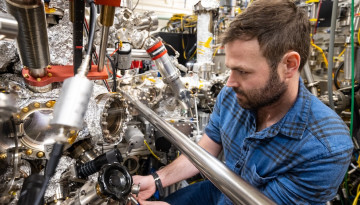
Superconductivity in iron selenide is primarily controlled by disorder in the crystal lattice, not electron count, Cornell physicists have found, a new insight for understanding high-temperature superconductors
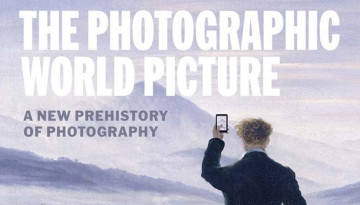
In his new book, “The Photographic World Picture: A New Prehistory of Photography,” associate professor Andrew Moisey describes how key aspects of photography’s “mechanical subjectivity” were present in early modern painting.
In his new book, “Cast Out: A Call for a Forgiving Society in an Age of Incarceration,” Joseph Margulies from the College of Arts and Sciences explores compassion and empathy, and the idea that “there is no them, there is only us.”
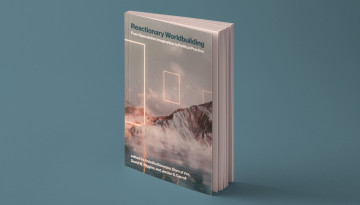
“Reactionary Worldbuilding,” a book co-edited by comparative literature scholar Anindita Banerjee, explores how speculative fiction and worldbuilding have influenced extremist ideologies and political movements.
An innovative major in the College of Arts & Sciences is being expanded and refined to highlight its combination of science, social science and the humanities and its relevance to careers today.
A $1.49 million award from the John Templeton Foundation will enable Cornell researchers Gordon Pennycook and David Rand ’04 to explore whether artificial intelligence can be used to understand and increase open-mindedness.
Life Science Core Day, taking place Sept. 22, offers Cornell researchers a chance to explore an extraordinary range of specialized life science core facilities, technologies, and expertise available to them from across campus in one place.