Immunotherapy shows promise for clearing residual melanoma cells
By Krishna Ramanujan, Cornell Chronicle
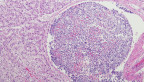
Cornell researchers successfully ramped up the body’s own immune response to fight melanoma at the tail end of a targeted cancer therapy, when tumors commonly become resistant to these therapies and leave behind residual cancer cells that can lead to more disease.
The paper, published Aug. 5 in the journal Cancer Research, also sheds light on how both the tumor and the cancer micro-environment evolve over time. This has important implications for when different types of cancer therapy – such as oncogene targeted therapies that use drugs, and immunotherapies that recruit the body’s own defenses – might be most effective.
“In the future, we need to look at the tumor at many points in time,” said Andrew C. White, associate professor in the Department of Biomedical and Translational Sciences in the College of Veterinary Medicine and the paper’s senior author.
“By knowing the most effective timing, we may pinpoint when giving an immunotherapy will work most effectively and potentially eradicate all the residual cancer cells,” he said.
Cancer specialists had thought that combining oncogene targeted therapies with immunotherapies simultaneously would provide a full spectrum of treatment, but they found the combination was not more effective than either therapy alone, and led to high toxicities, White said.
“It might work better to apply them in a particular sequence,” he said.
Oncogene targeted therapies block mutated cancer-causing proteins and perform well to initially shrink tumors. They also prompt the immune system to ramp up when the body detects dead cancer cells. Immune cells called macrophages recruit tumor T cells and natural killer cells to destroy cancer cells, until the tumor gains resistance. At that point, macrophages stop secreting proteins that recruit T and natural killer cells.
In the study, the researchers used mice with transplanted mouse melanoma cells and gave them the same oncogene-targeting drugs prescribed to humans. The tumors did initially shrink but left residual cancer cells that were then resistant to further treatment, as is found with humans.
The researchers gave the mice a compound developed at Purdue University that activated macrophages to continue secreting the proteins that recruit immune cells that kill cancer. While the mice weren’t completely cured, many more residual melanoma cells were eliminated.
The compound the team applied is considered a research tool, as opposed to a viable therapy, but it points the way toward a more effective and functional drug that might be administered when a cancer becomes resistant to oncogene targeted therapies.
Chia-Hsin Hsu, a doctoral student in White’s lab, is the paper’s first author. Co-authors include Robert Weiss, professor of molecular genetics in CVM; Richard White, professor of genetics at the University of Oxford; and Zhong-Yin Zhang, distinguished professor of medicinal chemistry at Purdue University.
The study was funded by Cornell and the National Institutes of Health.
Media Contact
Get Cornell news delivered right to your inbox.
Subscribe