ILR freshman Alyssa O'Connor has a ticket for the presidential inauguration and for a ball as a student in a five-day program sponsored by the University Presidential Inaugural Conference. (Jan. 13, 2009)
Recent graduates of Student Agencies eLab, the not-for-profit business accelerator for Cornell undergrads, has secured major funding, stemming from eLab's help. (Jan. 13, 2009)
The Light in Winter Festival of Science and the Arts is Jan. 23-25 on campus and other venues in Ithaca. The festival showcases cutting-edge ideas through theater, lectures, music and multimedia events.
Chen, who comes from the faculty of Carnegie Mellon University, started in January as director of the School of Electrical and Computer Engineering. (Jan. 12, 2009)
The Cornell law professor has expertise in the Middle East, northern Africa and sub-Saharan Africa. The Clarke Initiative for Law and Development in the Middle East was formerly called the Clarke Middle East Fund. (Jan. 12, 2009)
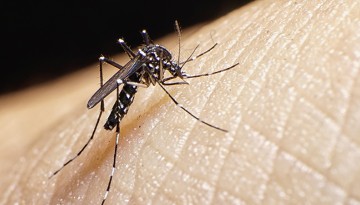
Cornell researchers report in Science that the mosquitoes that carry dengue and yellow fevers create harmonic love songs before mating. Disrupting the duets could lead to control measures. (Jan. 8, 2009)
Cornell and DuPont researchers have invented a method of preparing carbon nanotubes for suspension in a semiconducting 'ink,' which can then be printed into thin, flexible electronics. (Jan. 8, 2009)
New York first lady Michelle Paige Paterson visited campus Jan. 5 with hopes to improve the health of New York's children and reduce childhood obesity with help from Cornell University. (Jan. 8, 2009)
This past fall, the Geneva Head Start marked its 20th year touring the various facilities at Cornell's New York State Agricultural Experiment Station in Geneva. (Jan. 8, 2009)
Professor emerita Sara 'Sally' Blackwell, who played a crucial role in the 1966 reorganization of the College of Human Ecology, died Jan. 4. (Jan. 8, 2009)
A new study suggests that after a sudden rise in species numbers, oceanic plankton called diatoms abruptly declined about 33 million years ago -- trends that coincided with severe global cooling. (Jan. 7, 2009)
Gilbert E. Levine is serving as interim director of the university's Mario Einaudi Center for International Studies through June 30, 2009. (Jan. 6, 2009)