The major gift from the Brooks family, whose Cornell roots span three generations, provides an early boost to help the university’s newest school achieve world-class excellence.
Six graduate students were awarded 2021 Hsien and Daisy Yen Wu Scholarships. These scholarships recognize graduate students for their academic ability, performance and character as well as financial need.
The Society for the Humanities added to its grant offerings in 2021, awarding Humanities Impact Grants to humanities projects that “engage in broader public conversations with social impact in mind.”
Cornell researchers used dendrochronology and a form of radiocarbon dating called “wiggle-matching” to identify the ancient origins, and possible purpose, of a unique wooden structure in Northern Italy.
Two new faculty members who specialize in Native American and Indigenous literatures will join the Department of Literatures in English for the fall of 2021.
Research by Vivian Zayas, associate professor of psychology, found attractive investment partners were seen as more trustworthy even if they weren’t the most profitable.
As a CIFAR Azrieli Global Scholars, Baobao Zhang will investigate challenges governments face when addressing public perceptions of inequalities brought about by new technologies and Elizabeth Johnson will look into connections between infant nutrition and gastrointestinal health.
Scott Emr, director of the Weill Institute for Cell and Molecular Biology and professor of molecular biology and genetics, was awarded the prize for the landmark discovery of complexes that are central to life, health and disease.
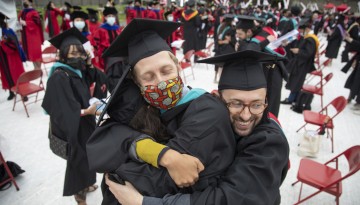
Four Commencement ceremonies were held May 29-30, spaced out to meet health guidelines. Though campus was less crowded, the campus mood was warm and celebratory.