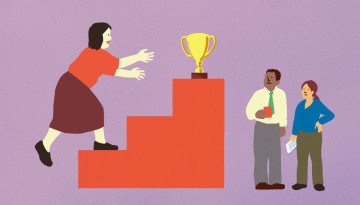
All employees like private rewards – a quiet salary increase or glowing performance review – but narcissists also want to have rewards made public for their colleagues to see.
Registration is now open for Cornell University’s online Winter Session. Classes run Jan. 4–22, giving students the opportunity to explore an interest, fulfill a requirement, or earn credits before the spring semester.
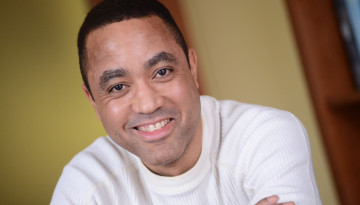
McWhorter, associate professor of linguistics at Columbia University, will offer a talk Nov. 2 as part of the College of Arts & Science's America250 events.
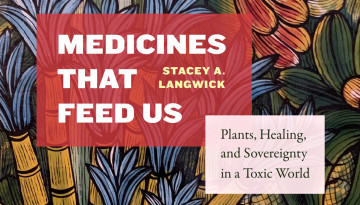
In a new book, anthropologist Stacey Langwick explores plant-based healing and sustainable farming practices in Tanzania that treat bodies and lands as inseparable.
In financial disclosures, particularly by companies that are coming out of tough times, a firm’s verbal circuitousness can paint a fuller picture of a company’s prospects, a Cornell research group found.
Cornell researchers’ analysis of 1.5 million petitions on Change.org showed that AI writing assistance altered the wording of petitions, increasing their homogeneity and length, but did not improve petition outcomes.
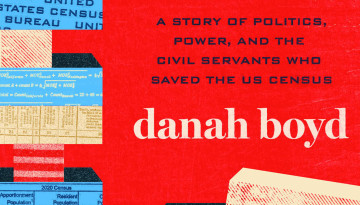
A new book, “Data Are Made, Not Found,” from danah boyd, professor of communication, is an insider’s account of the 2020 census and how the pandemic and political forces from left, right and center threatened to take it down like a Jenga tower.
Study reveals how a few very general constraints can lead to echo chambers – self-reinforcing feedback loops – in biological systems such as birds in a flock, cells in tissue or ants in a swarm.