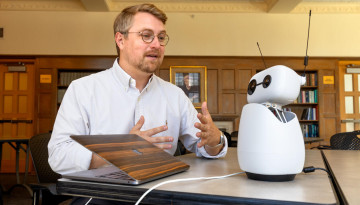
Instructors across Cornell are working to strike a balance in the classroom – using AI as a teaching tool but also making choices to prevent its use and preserve the learning experience.
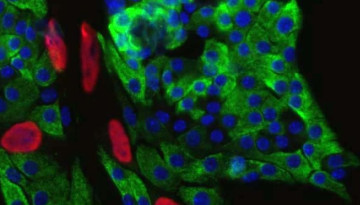
Experiments with preclinical models and human pancreatic cells found that blocking certain proteins in the pathway helped protect beta cells from excessive cellular stress.
Registration is now open for Cornell University’s online Winter Session. Classes run Jan. 4–22, giving students the opportunity to explore an interest, fulfill a requirement, or earn credits before the spring semester.
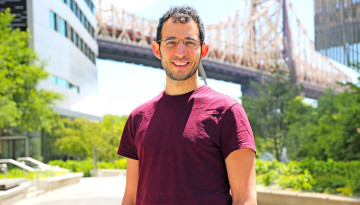
Makora, a startup founded by assistant professor Mohamed Abdelfattah, has received a $1.75 million award from the National Science Foundation-supported STRIDE Ventures AI Efficiency Challenge.
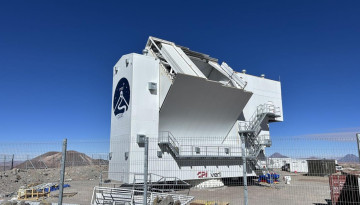
As the Fred Young Submillimeter Telescope nears first observations, Cornell scientists are preparing groundbreaking surveys of the early universe, galaxy formation and dark matter.
Researchers proposed a novel way to manage the increased demand for electricity by data centers: a credit market that would allow centers that are facing required cutbacks to pay flexible energy users to take on their obligations when the grid is strained.
The work is paving the way for hybrid optical-electronic systems that could reduce the energy and computational resources required for AI-driven image analysis and other visual inference tasks.
Kenji Yasuda, assistant professor in the School of Applied and Engineering Physics, was honored for his work with stacks of atomically thin materials that host emergent quantum phenomena.