Cornell is a global leader in sustainability and climate change research, teaching and engagement. Our campuses are living laboratories for developing, testing and implementing solutions that address these most challenging issues.


Genomic data show how fish fare in evolutionary rapids

Scientists have long suspected that rapid evolutionary change in fish is caused by intense harvest pressure. Now, for the first time, scientists have unraveled the genomic changes that caused it.

Groundwater policies fire up air pollution in northwest India

A measure to conserve groundwater in northwestern India has led to unexpected consequences: Added air pollution in an area already beset by haze and smog.

Cornell’s Eiseman counsels Scotland on climate policy support

A Cornell researcher is collaborating to help Scotland achieve net zero carbon emissions by 2045 through education to support new, stronger climate-action policies.

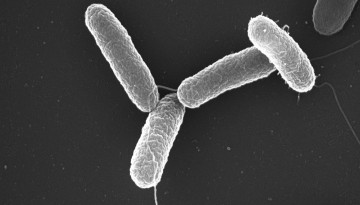
For salmonella detection, genomic tool emerges as a key

The world’s food supply will become safer as the food industry shifts to high-resolution, whole-genome sequencing – which examines the full DNA of a given organism all at once.

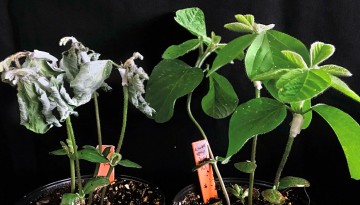
Worm pheromones protect major crops, BTI scientists find

Protecting crops from pests and pathogens without pesticides has been a longtime goal of farmers. Researchers at Boyce Thompson Institute have found that compounds from microscopic soil roundworms could achieve this aim.

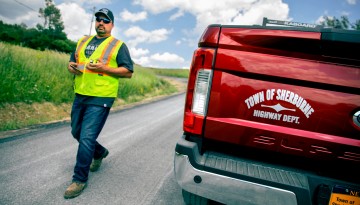
Street smarts: Cornell paves the way for safer roads in NYS

The Cornell Local Roads Program improves New York’s roads by serving the 1,500 village, town and county officials who maintain them, with workshops, technical assistance and up-to-date best practices.

Innovative AI system could help make fuel cells more efficient

An artificial intelligence system developed by a Cornell-led team has identified a promising material for creating more efficient fuel cells – a potential breakthrough in both materials science and machine learning.

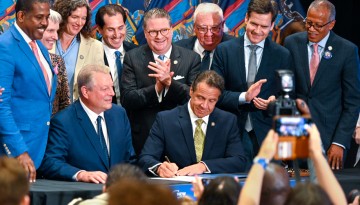
Howarth advised on methane portions of NY’s new climate law

Cornell professor Bob Howarth played a key role – reckoning methane as a carbon dioxide equivalent – in New York’s Climate Leadership and Communities Protection Act.

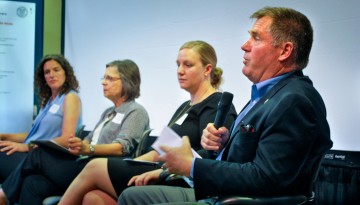
Workshop fuels discussion about biochar, NYS climate goals

Cornell and the Atkinson Center helped organize a workshop, “Helping NYS address its climate goals through thermochemical conversion,” on July 16 to develop opportunities for New York to meet its climate goals.