Cornell is a global leader in sustainability and climate change research, teaching and engagement. Our campuses are living laboratories for developing, testing and implementing solutions that address these most challenging issues.


A fresh look at China’s energy policy shows mixed results

Cornell researchers and their colleagues have created a new, comprehensive data set of China’s 2,656 energy-related policies operating in 30 provinces – and found they cancel each other out when it comes to energy consumption.

New grant program funds novel conservation collaborations

The Atkinson Center is partnering with The Nature Conservancy on three funded research projects, related to climate change, renewable energy and wildlife management. 

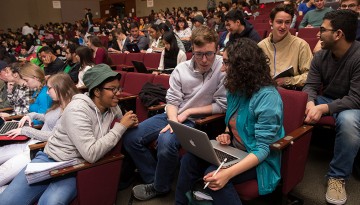
Active Learning Initiative funds nine projects

Innovative projects to enhance undergraduate teaching and learning in nine departments have received funding administered by Cornell’s Active Learning Initiative.

Mellon-funded Rural Humanities initiative launches

A Rural Humanities scholarly initiative, funded by a grant from the Mellon Foundation, will foster deeper engagement with rural communities, emphasizing “knowledge with a public purpose.”

To conserve energy, AI clears up cloudy forecasts

A machine learning model trained with years’ worth of forecast and weather data predicts the accuracy of the weather forecast – the basis of a system that can reduce buildings’ energy usage by up to 10 percent.

‘Deep tech’ innovations require industry partnerships

Creating new opportunities for industry partnerships and increasing engagement with the world beyond the lab could help researchers make a broader impact and meet grand challenges, said speakers at the “Deep Tech Eats Social Media for Lunch” panel, held Jan. 28 in the Upson Hall lounge.

Once-abundant sea stars imperiled by disease along West Coast

Warming oceans and an infectious wasting disease has devastated populations of large sunflower sea stars once abundant along the West Coast of North America, according to new research in Science Advances.

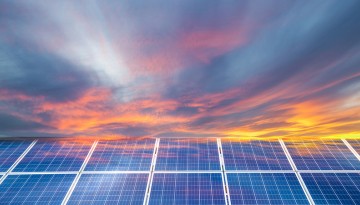
A first: Cornell researchers quantify photocurrent loss in particle interface

A group led by Peng Chen has, for the first time, quantified the current loss that occurs in particle-to-particle interfaces in solar panels, which could inform future designs.

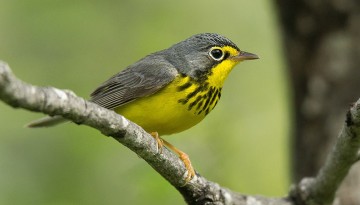
AI adjusts for gaps in citizen science data

Citizen science databases can be inconsistent, but Cornell researchers have developed a deep learning model that effectively corrects for location biases, leading to more reliable predictions.