Cornell is a global leader in sustainability and climate change research, teaching and engagement. Our campuses are living laboratories for developing, testing and implementing solutions that address these most challenging issues.

Alum lauds Israel's water management in campus talk

Seth M. Siegel, author of "Let There Be Water: Israel's Solution for a Water-Starved World," discussed spreading awareness of the global water problem before it becomes a humanitarian crisis Feb. 6.

Renewable fuels alone can't stop climate change

Karen Pinkus, professor of Romance studies and comparative literature, has written "Fuel: A Speculative Dictionary," to scramble our thinking about fuel as distinct from energy.

Momentum from 2016 economy will benefit first half of 2017

The positive economic momentum from 2016 will benefit the U.S. economy in the first half of 2017, but the country will likely feel the effects of policy changes from President Trump and Congress.

Pope's picture spurs Republicans to shift climate views

After Pope Francis framed climate change as a moral issue in his second encyclical, conservative Republicans shifted and began to agree, according to a new Cornell study.

New technique IDs micropollutants in New York waterways

Cornell engineers hope that clean water runs deep. They have developed a new way to test for more micropollutants in lakes and rivers that vastly outperforms conventional methods.

19 Cornell faculty chosen as 2017 Public Voices fellows

Cornell’s Public Voices Thought Leadership Fellowship Program seeks to increase the public impact of top underrepresented thinkers in the U.S. and to help them contribute to public conversations.

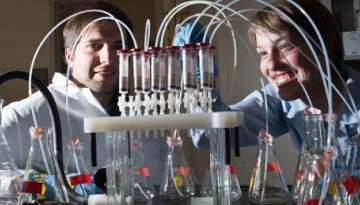
Decoded microbial metabolism explains biofuel yield

Cornell professor Ludmilla Aristilde is unraveling how intricate waste biomass converts to biofuels by studying the bacterium Clostridium acetobutylicum's sugar-processing complexities.

After Deepwater Horizon spill, oyster size did not change

Contrary to their own scientific intuition, Cornell researchers found that the body size of intertidal oysters went unchanged after the Deepwater Horizon oil spill disaster in the Gulf of Mexico.

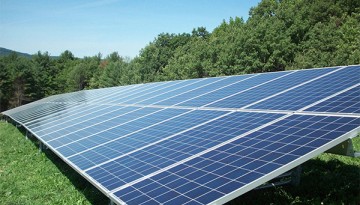
With three new solar farms, Cornell skims energy from the sun

Cornell now milks the sun for energy: The university formally opened three additional solar farms in December that will generate large amounts of electricity and help the campus achieve carbon neutrality.