Three faculty members - development economist Chris Barrett, mechanical engineer Sidney Leibovich and medical mycologist Dr. Thomas Walsh - have been named fellows of the American Association for the Advancement of Science.
Taken from the bottom of the marine food chain, microalgae may soon become a top-tier contender to combat global warming, climate change and food insecurity, according to Cornell researchers in Oceanography.
Cornell researchers have discovered a biological mechanism that helps convert nitrogen-based fertilizer into nitrous oxide, an ozone-depleting greenhouse gas.
Cornell experts issued a report this week outlining the opportunities and challenges facing the state's farmers and food producers as emerging digital technologies shape the agricultural industry.
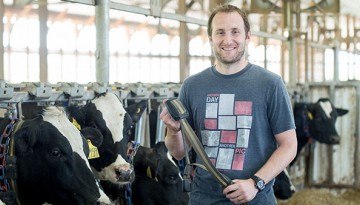
Collars with tags that carry an accelerometer – the same technology used in Fitbits for people – are effective non-invasive tools for tracking the health of dairy cows.
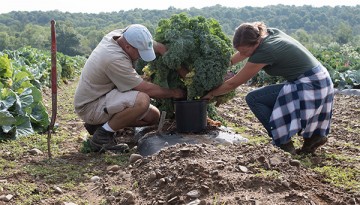
A Cornell breeding program is targeting the natural biodiversity of kale to further promote its acceptability and popularity as a leafy green vegetable among consumers.
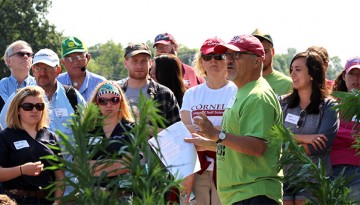
Farmers looking to reduce reliance on pesticides, herbicides and other pest management tools may want to heed the advice of Cornell agricultural scientists: Let nature be nature – to a degree.
In a presentation to global leaders battling climate change and feeding a burgeoning world population, Cornell's Dawit Solomon presented food security ideas to stave off the Earth's atmospheric warming.
A project led by Cornell researchers to better understand soil microbes and their role in the carbon cycle has received a three-year, $3.59 million grant from the U.S. Department of Energy.