In the war to keep food safe from bacteria, Cornell food scientists examine a class of weaponry called bacteriophages – an all-natural biological enemy for Listeria.
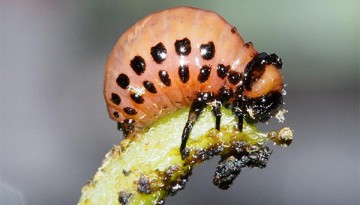
A novel insecticide targets a specific gene in a pest, killing only that bug species on crops and avoiding collateral damage to beneficial insects caused by today’s pesticides.
A new study published in BMC Biology describes greenhouse trials of a genetically engineered diamondback moth that suppresses populations of pest diamondback moths and reduces their resistance to Bt.
Students Kelley McElfresh ’16, Devin Hegelein ’17 and Katie Kraft ’17 are making substantial contributions to sales and manufacturing at Ithaca Hummus in Groton, New York.
Vanquishing the agony of defeat, Cornell food scientists now have better grasp on the sweet, thrilling taste of victory. And in the face of loss, the researchers found prompts for emotional eating.
Aiming to protect consumers from foodborne illness, produce farmers should wait 24 hours after a rain or irrigating their field to harvest crops - to reduce the risk to a major foodborne pathogen.
In an ongoing battle to save the ecologically important hemlock forests, Cornell researchers have high hopes for a new weapon against menacing woolly adelgids: silver flies.