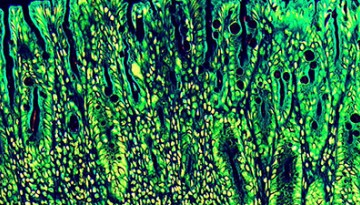
A specific group of fungi residing in the intestines can protect against intestinal injury and influence social behavior, according to new preclinical research by scientists at Weill Cornell Medicine.
New York growers will get a sustainable boost this planting season from the new Soil Health and Climate Resiliency Act – backed up by Cornell research – and signed into law by Gov. Kathy Hochul.
New York Gov. Kathy Hochul outlined plans for rebuilding the state’s infrastructure Feb. 10 at a New York City event sponsored by Cornell’s Institute of Politics and Global Affairs.
An FDA-approved drug that has been in clinical use for more than 70 years may protect against lung injury in severe COVID-19 cases, according to a preclinical study from researchers at Weill Cornell Medicine and Cold Spring Harbor Laboratory.
Gov. Kathy Hochul will describe her vision for the state’s infrastructure in a New York City conversation sponsored by the Cornell Brooks School’s Institute of Politics and Global Affairs.
Scientists at Weill Cornell Medicine have developed a pipeline that will enable study of the biological roles of gut bacteria, recognized as key factors in health and disease.
A growth factor protein produced by rare immune cells in the intestine can protect against the effects of inflammatory bowel disease, according to a new discovery from Weill Cornell Medicine researchers.
According to new research out of Weill Cornell Medicine, a protein that masterminds the way DNA is wrapped within chromosomes has a major role in the healthy functioning of blood stem cells, which produce all blood cells in the body.
Using an innovative new imaging technique, researchers at Weill Cornell Medicine have revealed the inner workings of a family of light-sensing molecules in unprecedented detail and speed.