As the Faculty of Computing and Information Science celebrates its 20th year, Frank Rosenblatt’s prescient research into artificial intelligence underscores Cornell’s pivotal role in computing history.
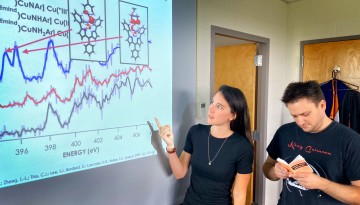
A collaboration between researchers from Cornell, Harvard, Stanford and the SLAC National Accelerator Laboratory has resulted in a reactive copper-nitrene catalyst that pries apart carbon-hydrogen bonds and transforms them into carbon-nitrogen bonds, a crucial building block for chemical synthesis.
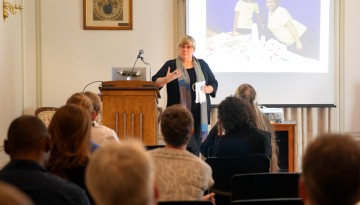
Poetry and performance, as well as more traditional presentations, were among the nine projects highlighted in the first Rural Humanities Showcase, held Sept. 6 in the A.D. White House.
Events this week include a climate rally, talks and films on climate change; a play depicting a soccer team’s coming of age; and a celebration of Korean language and culture.
The Cornell Neurotech Mong Family Foundation Lecture, Thursday, Sept. 26, will feature renowned neuroscientist David J. Anderson of Caltech, who will discuss “Neural Circuits Controlling Innate Social and Defensive Behaviors.”
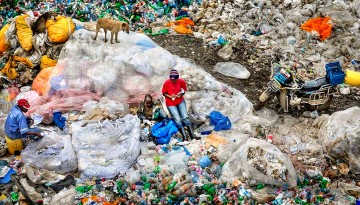
The U.N.’s Global Sustainable Development Goals report – prepared by independent scientists, including Cornell’s Parfait M. Eloundou-Enyegue – was delivered Sept. 10 to the U.N. Secretary-General.