Cornell’s journey to reaccreditation in 2021 has begun, with the formation of a steering committee comprising faculty members, administrators and students.
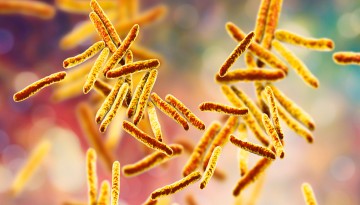
An investigation by Weill Cornell Medicine scientists has yielded two breakthroughs in the pursuit of combating growing resistance to tuberculosis treatments.
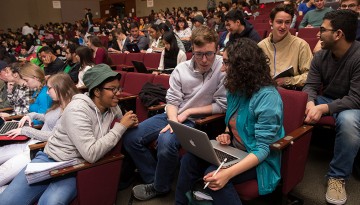
Innovative projects to enhance undergraduate teaching and learning in nine departments have received funding administered by Cornell’s Active Learning Initiative.
An exercise in learning phases of the moon conducted by the Virtual Embodiment Lab showed no real difference in learning between VR, hands-on and computer simulation methods.
Unauthorized Mexican and Central American immigrants who came to the United States as children or teens live in more complex and less stable households than their documented or native-born counterparts, according to a new study from Cornell researchers.
A Rural Humanities scholarly initiative, funded by a grant from the Mellon Foundation, will foster deeper engagement with rural communities, emphasizing “knowledge with a public purpose.”
A machine learning model trained with years’ worth of forecast and weather data predicts the accuracy of the weather forecast – the basis of a system that can reduce buildings’ energy usage by up to 10 percent.
Jessica Levin Martinez, head of the Division of Academic and Public Programs at the Harvard Art Museums, has been appointed director of the Herbert F. Johnson Museum of Art, beginning July 15.
A nano-sized guitar string vibrates and crackles in an unexpectedly organized and intricate way, according to researchers who devised a way to listen to a nanoscale guitar for the first time – and then played the Cornell alma mater on it.
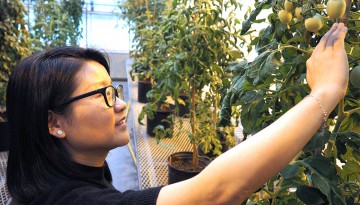
Researchers at the Boyce Thompson Institute have announced the launch of the Plant Genome Editing Database, which they hope will lead to research efficiency and collaborations.
Researchers at Cornell Tech found that people are far more likely to say they believe news stories that align with their own political views no matter what outlet they’re from. But when offered a cash bonus for accuracy, participants were more likely to trust the news stories that countered their views.