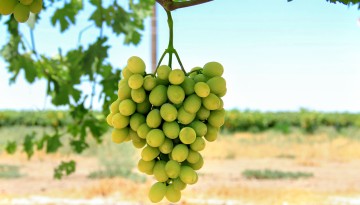
Two newly released grape varieties, developed collaboratively between Cornell AgriTech and Sun World International, a global fruit genetics and licensing company, offer new flavors for consumers and better growing characteristics for farmers.
Referring to police using the legal phrase “objectively reasonable” puts the officer in a more favorable light, regardless of race, according to new research from Neil Lewis Jr. ’13, assistant professor of communication, and doctoral student Mikaela Spruill.
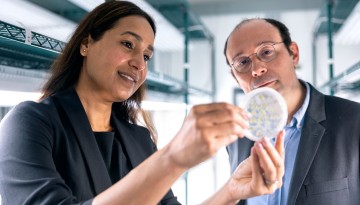
Meiogenix, a next-generation technology startup that helps agricultural crops find their own genetic solutions, via chromosome editing, has joined Cornell’s McGovern Center incubator.
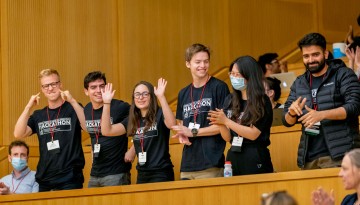
Students from 28 fields across six different schools gathered at the fourth annual Digital Agriculture Hackathon, March 11-13, to find solutions to global food system issues while competing for cash prizes.
Drawing inspiration from 19th century glass artists, David Nasca's new installation “Model Organisms” in the Mann Library uses ocean life to create metaphors relating to humanity's present and imagined futures.
Christina Ochoa, who advocates for incarcerated people serving life sentences in New York state through the Cornell University Parole Initiative, earned the Newman Civic Fellowship for her dedication to transforming systemic injustice in prisons and parole policies.
Students are invited to enroll now for Cornell’s Summer Session where they can earn up to 15 credits. Courses are offered online, on campus and around the world in three-, six- and eight-week sessions between May 31 and August 2, 2022.
Faculty experts and Ukrainian students will speak about how the Russian invasion of Ukraine threatens lives, the post–Cold War international order and the stability of the global economy at an event March 17 at 4:30 p.m.