A Cornell-led collaboration has developed a noninvasive blood test that uses cell-free DNA to gauge the damage that COVID-19 inflicts on cells, tissues and organs, and could help aid in the development of new therapies.
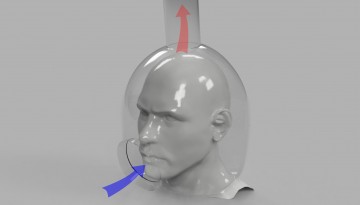
Simulations show the helmet, designed by the Esmaily Lab, prevents 99.6% of virus-containing droplets exhaled by medical patients from reaching the environment.
A Cornell engineer is advancing the field of ‘multi-sector dynamics’ with a new $1.4 million grant from the U.S. Department of Energy that will focus on techniques for better projecting the outcomes of human interactions with the natural world.
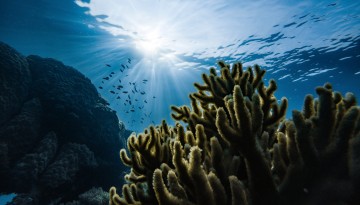
Attracting more than 1,000 students every fall, Intro to Oceanography is the largest course at Cornell. When Senior Lecturer Bruce Monger started recording the lectures for remote teaching, he partnered with eCornell and ended up developing a publicly accessible oceanography and climate sustainability course too.
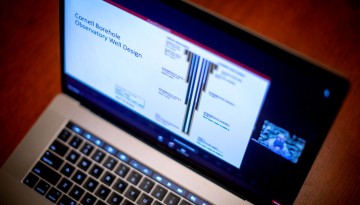
Cornell is moving forward, and underground, with plans to drill an observatory borehole to explore the viability – and ensure the safety – of using geothermal energy to heat the Ithaca campus.
The annual Cornell Day of Data, this year a two-day virtual event, Jan. 27-28, brings together professors, researchers and students from across the university to share techniques, tools and insights in working with data.
A Cornell collaboration has found a way to grow a single crystalline layer of alpha-aluminum gallium oxide that has the widest energy bandgap to date – a discovery that clears the way for new semiconductors that will handle higher voltages, higher power densities and higher frequencies than previously seen.
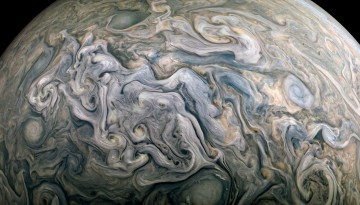
NASA’s Juno spacecraft and the InSight lander have both received mission extensions, the space agency announced Jan. 8. Cornell astronomers serve key roles on both projects.
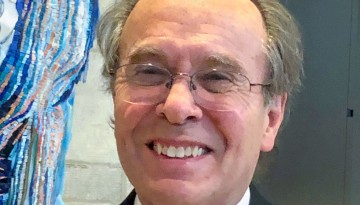
K. Bingham Cady, professor emeritus of nuclear engineering in the Sibley School of Mechanical and Aerospace Engineering, died Dec. 10 at Northwestern Memorial Hospital in Chicago. He was 84.