Cornell is a global leader in sustainability and climate change research, teaching and engagement. Our campuses are living laboratories for developing, testing and implementing solutions that address these most challenging issues.
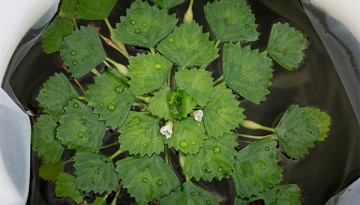

Herbicides can't stop invasive plants. Can bugs?

Bernd Blossey is close to the end of a research program that identified a leaf beetle, Galerucella birmanica, which feasts on water chestnuts, as the perfect predator to help clear New York's waters.

Fall Fest, a fair touting sustainability groups, is Aug. 28

If you want to go green, get involved: Tour tables at Fall Fest 2016, an exposition of more than 30 student sustainability groups who are recruiting new members, Aug. 28 on North Campus.

$1M NIH grant helps researchers refine quick cancer test

The National Institutes of Health has awarded Cornell and UCSF researchers a four-year, $1 million grant to hone technology for in-the-field diagnosis of Kaposi's sarcoma – frequently related to HIV infections.

Moving in, students absorb lessons on dealing with drought

With local creek water levels historically low as students arrive on campus to start the semester, Ithaca's 2016 summer drought has become a teachable moment.

Hospitality, Health and Design Symposium Oct. 9-11

Scholars and industry leaders are expected at the Cornell Hospitality, Health and Design Symposium, Oct. 9-11, which will examine relationships among hospitality, health care, senior living, design.

Plant disease clinic identifies new case of oak wilt

Earlier this year, the Cornell University Plant Disease Diagnostic Clinic (CU-PDDC) used a new rapid test they developed to identify a small number of oak trees with oak wilt disease on Long Island.

Campus water-use restrictions remain in effect

New and returning Cornell students heading to campus for the fall semester are learning how Ithaca spent its summer vacation: very dry. Campus water-use restrictions remain in effect.

New minor focuses on food systems' equity, sustainability

Starting this fall, students can choose a new minor in Community Food Systems, a multidisciplinary minor that explores the agricultural, ecological and ethical dimensions of food systems.

Bacteria's own genome becomes food safety tool

Bacillus cereus can no longer hide. The food safety world now has a new tool to find foodborne illness – the bacteria's own whole genome, reports Cornell food scientists.