Cornell is a global leader in sustainability and climate change research, teaching and engagement. Our campuses are living laboratories for developing, testing and implementing solutions that address these most challenging issues.
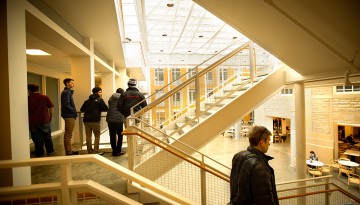

Klarman Hall receives LEED Platinum certification

Klarman Hall – the university's light-filled humanities building that opened last semester – was certified LEED Platinum July 29.

Cornell issues water use restrictions as drought worsens

Now in the most severe drought seen in Tompkins County since climate data records have been kept, Cornell has reached second-stage drought level and issued water use restrictions effective July 28.

Biological wizardry ferments carbon monoxide into biofuel

Cornell biological engineers have deciphered the cellular strategy to make the biofuel ethanol, using an anaerobic microbe feeding on carbon monoxide – a common industrial waste gas.

Male frogs have sex on land to keep competitors away

A new study shows for the first time that some frogs hide eggs on land to reduce competition from other males who also want to fertilize those eggs.

Summer course maps history, future of green cities

The Cornell Summer Session course Green Cities: Creating the Living City provides students with tools and ideas to shape the future of the ecological urban landscape.

Vineyard cover crops save expense, environment

Planting cover crops under grapevines provides vineyard managers with a sustainable alternative to herbicide treatments in cool and humid climates while tamping down unnecessary herbicide use costs.

For dairy farms, flaring methane offers mitigation option

As New York's dairy farms get larger and store more manure, methane emissions have doubled in the last two decades. To reduce this potent greenhouse gas in the atmosphere, Cornell researchers advocate combustion.

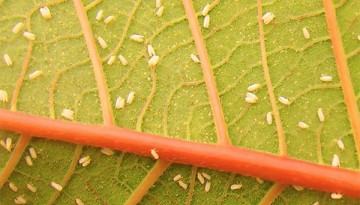
Ancient symbiosis points to possible whitefly controls

Uncovering the details of a 100 million-year-old symbiosis between bacteria and whiteflies opens the door for controlling an insect pest that is rated one of the top 10 invasive species on the planet.

As sea level rises, Hudson River wetlands may expand

In the face of climate change and inevitable sea level rise, Cornell scientists studying the Hudson River estuary have forecast 33 percent more wetland area by the year 2100.