President Martha E. Pollack and Dr. Jean William Pape, M.D. ’75, professor in clinical medicine at Weill Cornell Medicine, have been elected to the American Academy of Arts and Sciences.
A multi-year study of the role of E. coligut bacteria in Crohn’s disease finds that intestinal inflammation liberates chemicals that nourish the bacteria’s growth and promotes their ability to cause inflammation.
Abnormalities in a type of brain cell called astrocytes may play a pivotal role in causing some behavioral symptoms of autism spectrum disorders, according to a preclinical study by Weill Cornell Medicine investigators.
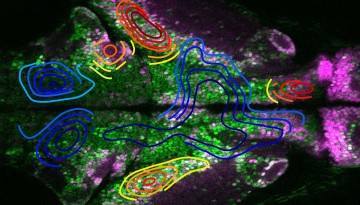
New evidence from a zebrafish model of epilepsy may help resolve a debate into how seizures originate, according to Weill Cornell Medicine and NewYork-Presbyterian investigators. The findings may also be useful in the discovery and development of future epilepsy drugs.
“Help Cure Alzheimer’s Disease!,” a workshop hosted by students from the Meinig School of Biomedical Engineering, provided an opportunity for high-school girls to contribute directly to Alzheimer’s research.
The center, with more than 120 faculty members, builds on the multidisciplinary nature of research into the immune system, with links between infection biology, vaccine development, genetics, genomics, malignancy and biomedical engineering.
The pediatrician who eight years ago called attention to lead-tainted water in Flint, Michigan, will deliver the Joyce Lindower Wolitzer ’76 and Steven Wolitzer Nutrition Seminar April 26.
Legalization of recreational marijuana reduces demand for costly prescription drugs through state Medicaid programs, according to an analysis by a Cornell researcher and a collaborator.