Cornell’s Jack'd Jerky – a nutritious vegan snack that offers a refreshing respite from salt-laden meat jerky – won the 2017 IFT food product development competition June 27 in Las Vegas.
A deeper understanding of the brain’s connectivity network of neurons and its relationship to the organ’s deep tissue could allow recognition of what processes relate to neurological disorders.
A material strong enough to protect the intestines from a needle puncture and bendable enough to insert through a laparotomy incision that quickly dissolves in the body is being studied.
An enzyme implicated in autoimmune diseases and viral infections also regulates radiation therapy's ability to trigger an immune response against cancer, Weill Cornell Medicine scientists found in a new study.
Cornell and IBM announced a joint research project June 23 that will use genetic sequencing and big-data analyses to help keep the global milk supply safe.
The first-ever 'disease in a Petri dish' platform that models human colon cancer derived from stem cells has been developed by Weill Cornell Medicine investigators, allowing them to identify a targeted drug treatment for a common, inherited form of the disease.
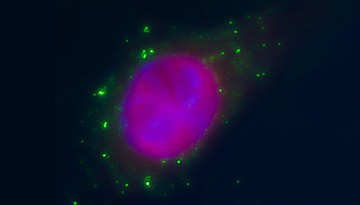
A calcium-dependent molecular mechanism discovered in the brain cells of mice by Weill Cornell Medicine investigators may underlie the impaired social interactions and anxiety found in neuropsychiatric disorders – including schizophrenia and autism.
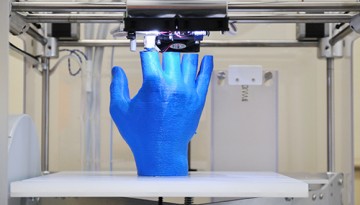
The Clinical and Translational Science Center, in collaboration with the medical student group Tech-in-Medicine, hosted its first hackathon, the 3-D Printing Innovation Challenge, over the course of several days in May.
Cornell and Ludwig Institute for Cancer Research scientists have developed a way to produce a protein antigen that may be used as a vaccine for the tropical disease schistosomiasis.