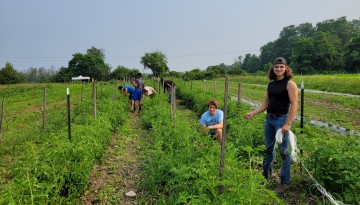
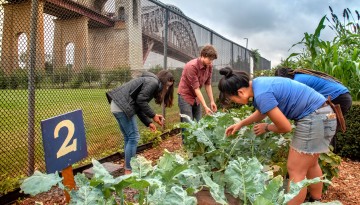
A new summer internship enables undergraduates across disciplines to learn about organic, restorative and agroecological practices while working at diversified, small-scale farms around New York state.
New research from the College of Engineering aims to ease the process of chemical recycling – an emerging industry that could turn waste products back into natural resources by physically breaking plastic down into the smaller molecules it was originally produced from.
Mitigating abuses of encrypted social media communication, on outlets such as WhatsApp and Signal, while ensuring user privacy is the focus of a five-year, $3 million NSF grant to a multidisciplinary Cornell research team.
Cornell Cooperative Extension supports residents of every borough in New York City, thanks to its long-standing community relationships and faculty research and expertise.
Professor Durba Ghosh, Professor in the Department of History, College of Arts and Sciences, discusses the 50th anniversary yearlong celebration of Cornell's women’s studies program, now Feminist, Gender and Sexuality Studies (FGSS), as well as Lesbian, Gay, Bisexual and Transgender (LGBT) programs at Cornell.
New York City’s app-based delivery workers regularly face nonpayment or underpayment, unsanitary or unsafe working conditions and the risk of violence, according to a new ILR School report.
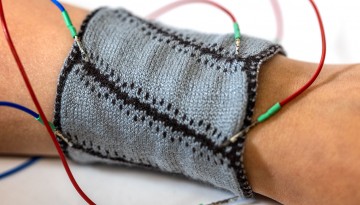
Cindy Hsin-Liu Kao, assistant professor in the College of Human Ecology, uses knitting and weaving techniques to make on-skin devices that express the wearer’s personality.
In her new book released this week, ILR associate professor Vanessa Bohns illustrates why individuals fail to recognize their own influence, and how that lack of awareness can lead to missed opportunities or accidental misuse of our power.
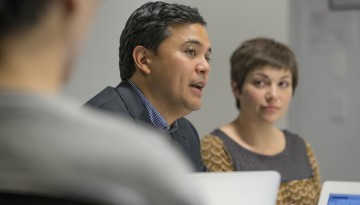
The Technology and Law Colloquium – a hybrid Cornell University course and public lecture series – returns this semester with talks from 13 leading scholars who study the legal and ethical questions surrounding technology’s impact in areas like privacy, sex and gender, data collection, and policing.