As world governments prepare the first-ever Global Stocktake, assessing whether they are living up to climate targets, Cornellians’ research is playing a critical role.
Cooper Sirwatka began running ultramarathons five or six years ago, building up endurance to go well over the standard 26.2 miles. Long distances, rough terrain and unpredictable environments are elements that Sirwatka thrives in best—whether on race day or in the workplace.
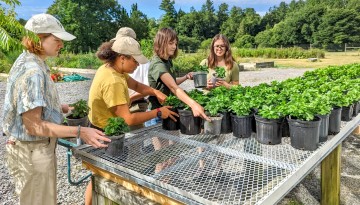
Cornell Botanic Gardens’ Learning by Leading program is an engaged learning initiative launched in 2021 to support a new generation of environmental leaders.
Competition negatively impacts moral behavior – a new study by ILR School Assistant Professor Brian Lucas, ILR Ph.D. student Zachariah Berry and dozens of other co-authors affirms that.
Recent scientific discoveries have shown that Neanderthal genes comprise some 1 to 4% of the genome of present-day humans whose ancestors migrated out of Africa, but the question remained open on how much those genes are still actively influencing human traits — until now.
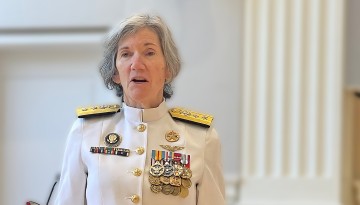
The Cornell Veterans Colleague Network Group (VCNG) and the College of Human Ecology co-sponsored a “lunch and learn” discussion on May 26, 2023, that focused on the ethics of leadership and design.
A small toilet-installed device, under development by CareTech Human, would enable urological patients to provide doctors with quantitative health data without the hassle or inaccuracies of self-reporting.
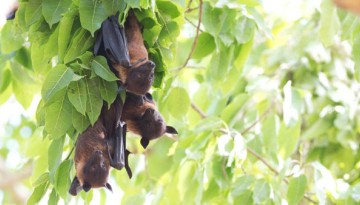
Authors from the College of Veterinary Medicine say allowing bats to survive and thrive by letting them exist undisturbed in their habitats can pay other dividends around the world.
As society ponders the dangers and unknowns of AI, Liz Karns is giving statistics students a first-hand look at the potential implications for users of large-scale predictive models, in hopes of increasing their empathy and awareness of unintended consequences.