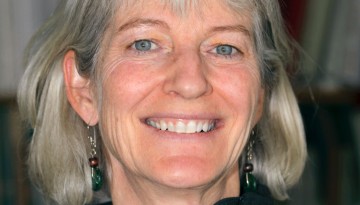
Drew Harvell, professor emerita of ecology and evolutionary biology who studies sustainable marine biodiversity, is one of seven U.S. researchers named 2023 U.S. Science Envoys by the Department of State.
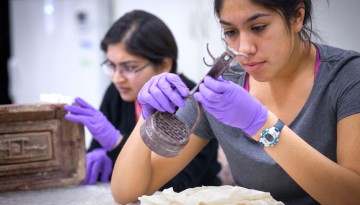
Cornell University Library has acquired a trove of archival materials documenting the creation of “The Civilization of Llhuros,” a groundbreaking 1972 art exhibit that satirized the tropes of archaeology and anthropology to draw crucial connections between the past and the present, highlighting the challenges all societies face.
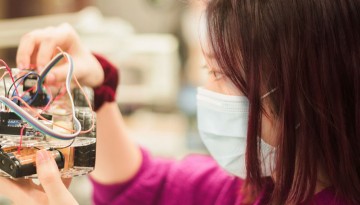
The robot’s layered filtration system will gather tiny bits of plastic the size of a sesame seed and smaller, which contaminate ecosystems and damage human and animal health.
President Martha E. Pollack has established a task force to interrogate all aspects of the undergraduate admissions process and to recommend a universitywide admissions policy and best practices that will be guided by Cornell’s founding mission and can be adapted by the admissions offices of each school and college.
At the heart of every CRISPR reaction, whether naturally occurring in bacteria or harnessed by CRIPSR-Cas gene editing technology, is a strong molecular bond of a Cas protein via a guide RNA to its target site on DNA.
Karen Levy, associate professor of information science, examines how truckers’ work is being affected by a proliferation of electronic logging technology in a new book, “Data Driven: Truckers, Technology, and the New Workplace Surveillance.”
Changes in a single gene open the door for harmful gut bacteria to set off the inflammation that drives Crohn’s disease, according to a new study led by Weill Cornell Medicine and NewYork-Presbyterian investigators.
Unrelenting climate change is leading to extended, late-summer weeks of water stratification, which prompts varying degrees of oxygen deprivation in lakes, says new Cornell research.
Data science, molecular mechanisms, unconventional computing for optimization and machine learning, wave interaction with engineered materials, electrocatalysis, and compound semiconductor devices are among some of the research themes that helped six faculty members earn Cornell Engineering Research Excellence Awards.
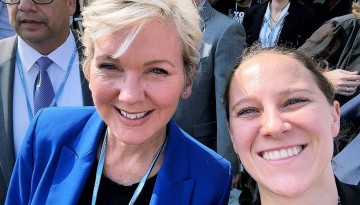
Courtney Schneider (r) took a selfie with U.S. Secretary of Energy Jennifer Granholm, one of many memorable moments at the United Nations Conference on Climate Change. Three students in the Cornell Jeb E. Brooks School of Public Policy participated in the conference, known as COP27.
Researchers from the Department of Communication state that at the current rate of diversification, U.S. colleges and universities will never achieve racial parity that’s on par with the rest of the country, but that steps can be taken to make it happen.